
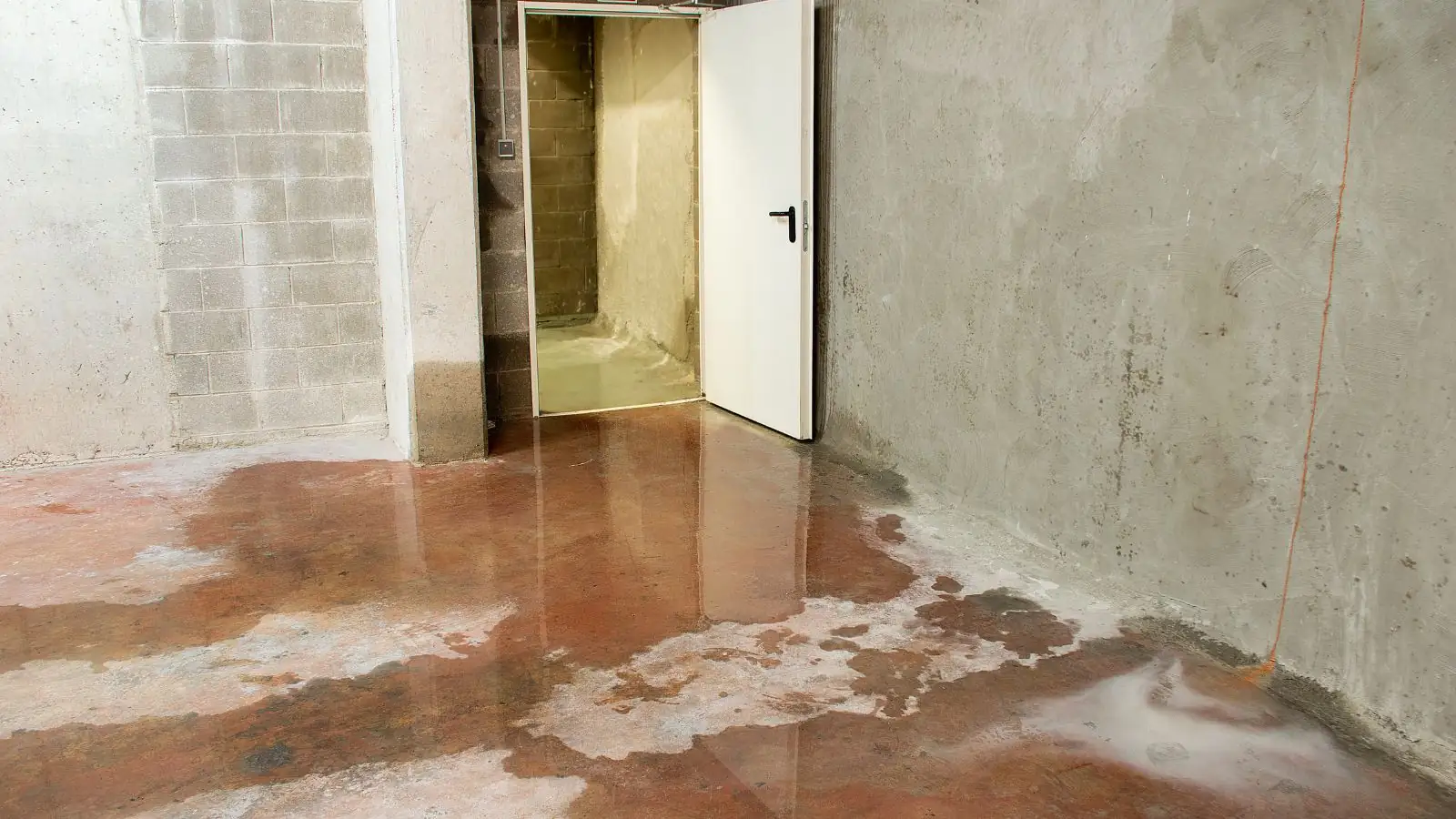
Basement water damage is what happens when water reaches a room that sits below or partly below the ground outside. That could be a finished lower level, a below-grade garage, a storage room, or a room cut into a slope with one wall buried in earth.
We want to be plain about Encinitas. We have no verified count of how many homes here have a basement or lower-level room, and we cannot document true full basements in town. This page applies if your home has any room below or partly below ground, and if yours does not, the other pages on this site fit better.
How water gets into a lower room
Water finds a below-grade room by four main routes. Rain runoff pools against an exterior wall and pushes through a crack or a window well. Groundwater rises after a long wet stretch and seeps up through the slab joint. A supply line or water heater fails inside the room, or a floor drain lets water up from the line outside.
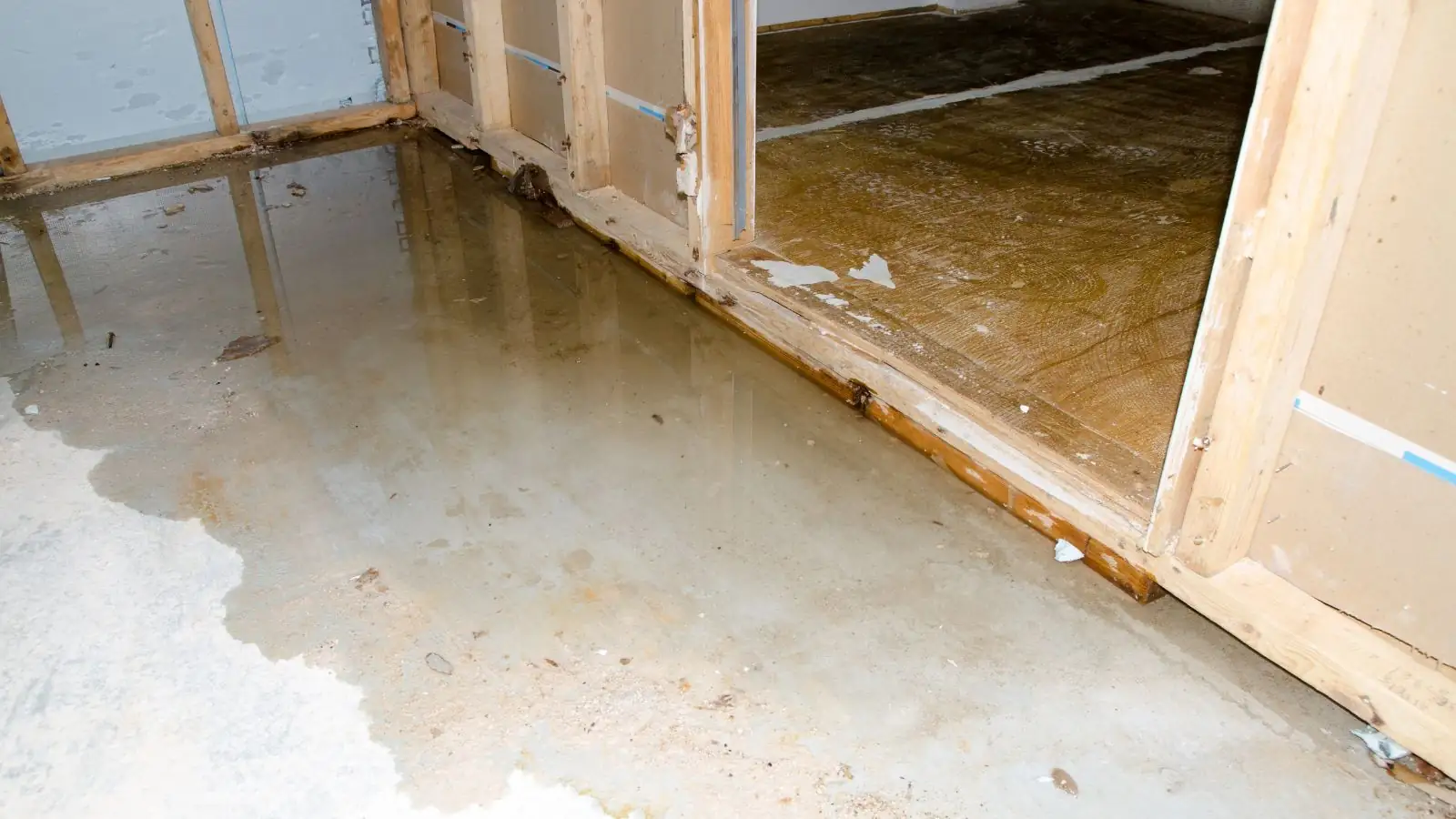
Rain is the pattern to watch locally. The National Weather Service table for San Diego's Lindbergh Field gauge shows about 85 percent of the year's rain falling from November through March. If a lower room of yours has taken water before, that stretch is when to check the walls and the floor drain after each storm.
Sump pumps matter for the same reason. A sump collects water from around the foundation and pushes it out, so a pump that fails during a storm, or loses power with the grid, lets the pit overflow into the room. If you have one, test it before the wet season.
Water sitting in a lower room and you are not sure how deep it is? Call (760) 769-1159 and tell dispatch what the room is made of and what is stored in it.
☎ (760) 769-1159What you see and what it usually means
| What you see | What it usually means |
|---|---|
| Standing water after rain | Runoff or groundwater is entering, or a drain or pump is not keeping up. |
| Damp line low on the wall | Water wicking up drywall or paneling from the floor. |
| Carpet squishes or smells sour | Pad is saturated and holding water against the slab. |
| Water from a floor drain | The line outside is overloaded or blocked. See the sewage page below. |
Water from outside or up a drain can carry soil and bacteria. The ANSI/IICRC S500 reference treats it as Category 2 or 3.
First-hour safety steps for a wet lower room
Electrical rule for lower rooms
If water is over outlets, over a power strip, or near the panel, stay out of the room. Cut power at the main only if the panel is dry and you can reach it without stepping in water. If you smell gas, hear buzzing, or cannot tell whether the water is live, call the utility or 911 before you call us.
- Stop the source if it is a pipe or heater. Close the shut-off valve or the main water valve.
- Photograph the water line on the wall, the damaged items and the source, from the doorway or stairs.
Then call (760) 769-1159. Dispatch is answered 24/7, same-day response is offered when available, and we do not promise an arrival time. We can tell you on that first call what is safe to do while you wait.
How we clean up and dry a lower room
- Assess and documentWe check for electrical hazards, find the source and take moisture readings on floor, wall base and framing before touching anything.
- Pump and extractSubmersible pumps and extraction units remove standing water. If the soil outside is saturated, we lower the water in stages rather than all at once.
- Remove what cannot be savedWet carpet and pad come up first. Drywall is cut above the wicking line, and wet insulation behind it is bagged.
- Dry the structureAir movers and LGR dehumidifiers run in a closed room, because concrete and block hold water far longer than drywall. Our full approach is described on the structural drying page.
- Verify before rebuildWe log readings each day and compare them to a dry reference. Drywall, flooring and paint go back only after the readings say the structure is dry.
Finished and unfinished lower rooms dry differently
A finished room is harder because the walls hide the problem. Drywall over block, insulation in the stud bays and carpet over a slab all trap water against masonry that dries slowly. We cut small inspection openings first, and open more only where the readings call for it.
If you are not sure whether the water was clean or dirty, say so on the call. A drain or outside runoff is handled differently from a pipe, and if it came up a drain, our sewage backup cleanup page covers the added precautions.
Encinitas conditions worth knowing
The City of Encinitas hazard mitigation plan names Escondido, Encinitas and Cottonwood Creeks among its flood-prone areas, along with low-lying parts of Leucadia and Old Encinitas. It also records a chronic history of rainwater flooding in parts of Leucadia. If a lower room of yours is near one of those spots, treat each heavy storm as a reason to check it.
Batiquitos Lagoon forms the city's northern edge and San Elijo Lagoon its southern edge. Ask the City of Encinitas Building Division about your lot before changing a lower room.
When water comes from rising creeks or street flooding rather than a pipe, it is a flood loss, and our flood damage restoration page explains that case. We also take calls from nearby towns, including Solana Beach and Carlsbad.
What changes the cost
- Water category. Clean pipe water and runoff or drain water lead to different removal and cleaning scopes.
- Depth and affected area. How much of the floor and how high on the walls the water reached.
- Materials. Carpet and pad, drywall, insulation, paneling and bare concrete each need different handling.
- Drying days and equipment. Slabs and block walls often need more drying days than framing.
- Rebuild scope. Removal and drying are one scope, and new finishes are another.
Insurance: pipe, flood or drain
How a claim is treated depends on where the water came from. Sudden and accidental plumbing failures are often covered, gradual leaks and neglect often are not, and the California Department of Insurance says homeowners policies typically exclude flood. Flood coverage is the federal National Flood Insurance Program, and a new policy typically takes effect 30 days after purchase.
Water that backs up a drain or a sump is its own question that many policies treat separately. Check your policy for the wording, ask your insurer which cause applies, and take dated photos before anything is removed.
Mistakes to avoid
- Pumping a flooded room empty at once while the ground outside is still saturated.
- Covering wet block or a slab with new flooring or paint before it has been measured dry.
- Walking into water that may be over a live outlet.
If you see dark spots or smell mustiness days later, call about mold remediation before you cover anything over.
Frequently Asked Questions
Yes. Dispatch is answered 24/7, and same-day response is offered when available. We do not promise an arrival time, but the first call covers safe steps and what to photograph. If water is near outlets or the panel, call the utility or 911 first.
Pumps fail from a stuck float, a clogged intake, a worn motor or lost power during a storm. A plumber or a drainage contractor can diagnose it, and a restoration crew handles the water and the damage.
No. We remove water and damaged materials and dry the structure. Drainage, grading and wall sealing are separate trades, so ask a contractor and check the license at cslb.ca.gov.
It varies with how long the water sat, the slab and the equipment. We read moisture each visit and the readings tell us when it is dry.