
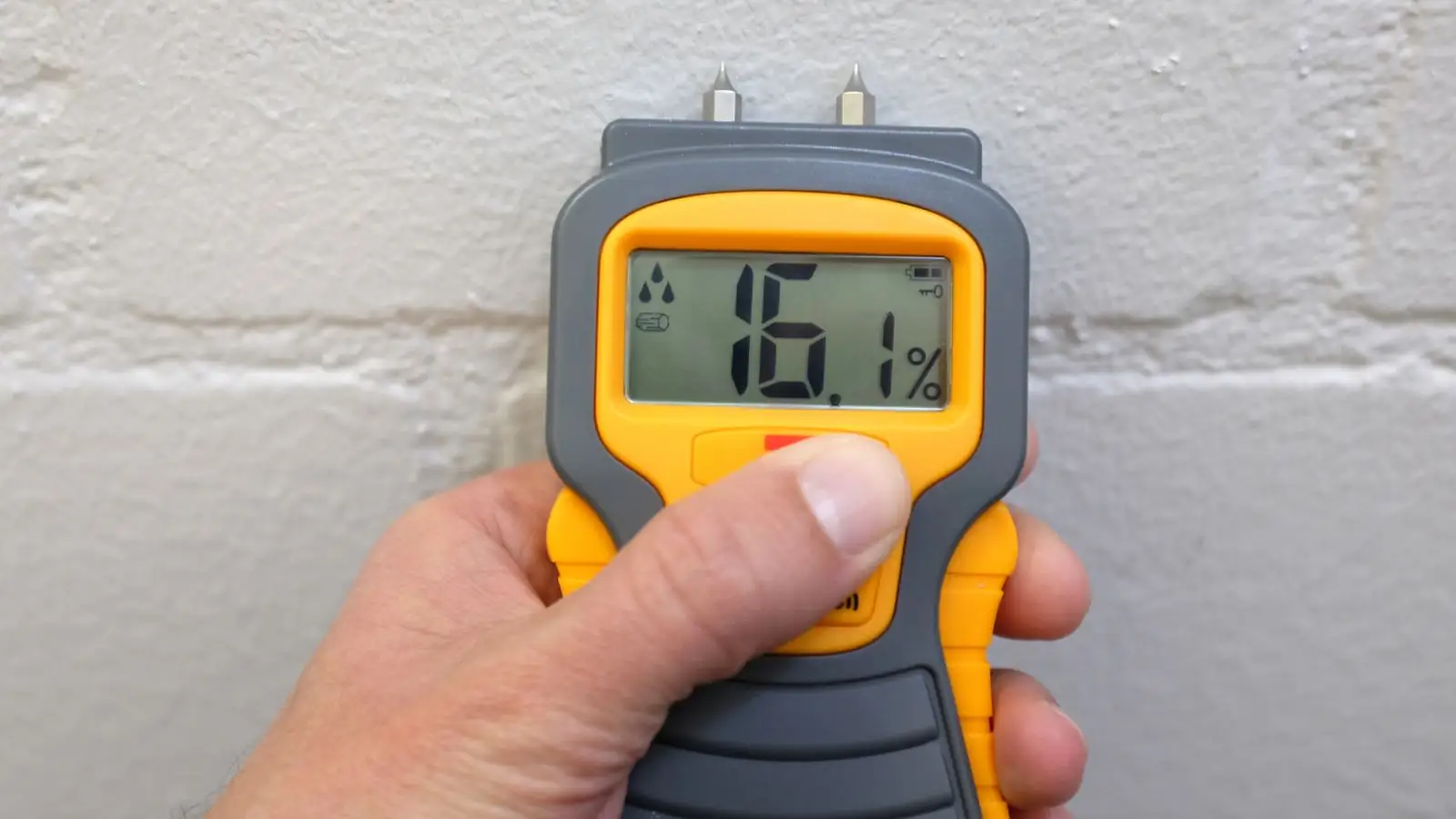
Structural drying is the process of removing moisture from the parts of a building that hold it: studs, plates, subfloor, concrete slab, insulation and the cavity inside a wall. It is done with air movers, dehumidifiers and sometimes drying mats, and it is verified with a moisture meter, not by touch or smell.
This page covers the days-long verified-drying stage. The first day, when the leak is stopped and standing water comes out, is covered under water mitigation.
Why a Room Can Feel Dry While the Framing Is Wet
Surfaces dry first. Paint, carpet tops and the face of a drywall board give up water to the room air within a day or two, while studs, bottom plates and the space behind a baseboard hold it far longer.
That gap is why a hand on the wall tells you very little. A wall can pass the touch test and still read wet inside, and that trapped water is what later shows up as swollen trim, a musty smell or mold growth.
Not sure whether your walls are really dry? Call and describe what you see, and dispatch will tell you how a drying check works.
☎ (760) 769-1159What You See and What It Usually Means
| What you notice | What it can mean |
|---|---|
| Walls feel dry but baseboards look swollen | Moisture is still in the bottom plate or the cavity behind the board |
| Windows fog or the room feels clammy with machines running | Water is leaving materials as vapor, so the dehumidifier has work left to do |
| Musty smell that returns after the machines stop | Equipment came off before the cavity or subfloor was dry |
Safety Steps While Equipment Is Running
Electrical or gas risk comes first
If water has reached an outlet, a panel, a sparking fixture or a gas appliance, stay out of the room and call 911 or your electric or gas utility before calling us. Cut power at the main panel only if you can reach it while standing on dry ground.
Never touch equipment, cords or a breaker with wet hands or while standing in water.
- Keep drying equipment on its own plugged-in circuit and do not add extension cords or power strips of your own.
- Do not turn equipment off to sleep without calling us. A partly dry structure can reverse quickly.
Our Drying Process, Day by Day
- Baseline readingsA technician checks the wet area and an unaffected room with a moisture meter. Readings from dry wood, drywall and concrete in your own home become the reference we dry toward.
- Moisture map and thermal imagingWe mark wet and damp points on the surfaces, and an infrared camera shows temperature differences that point to water behind finishes. It shows where to put the meter.
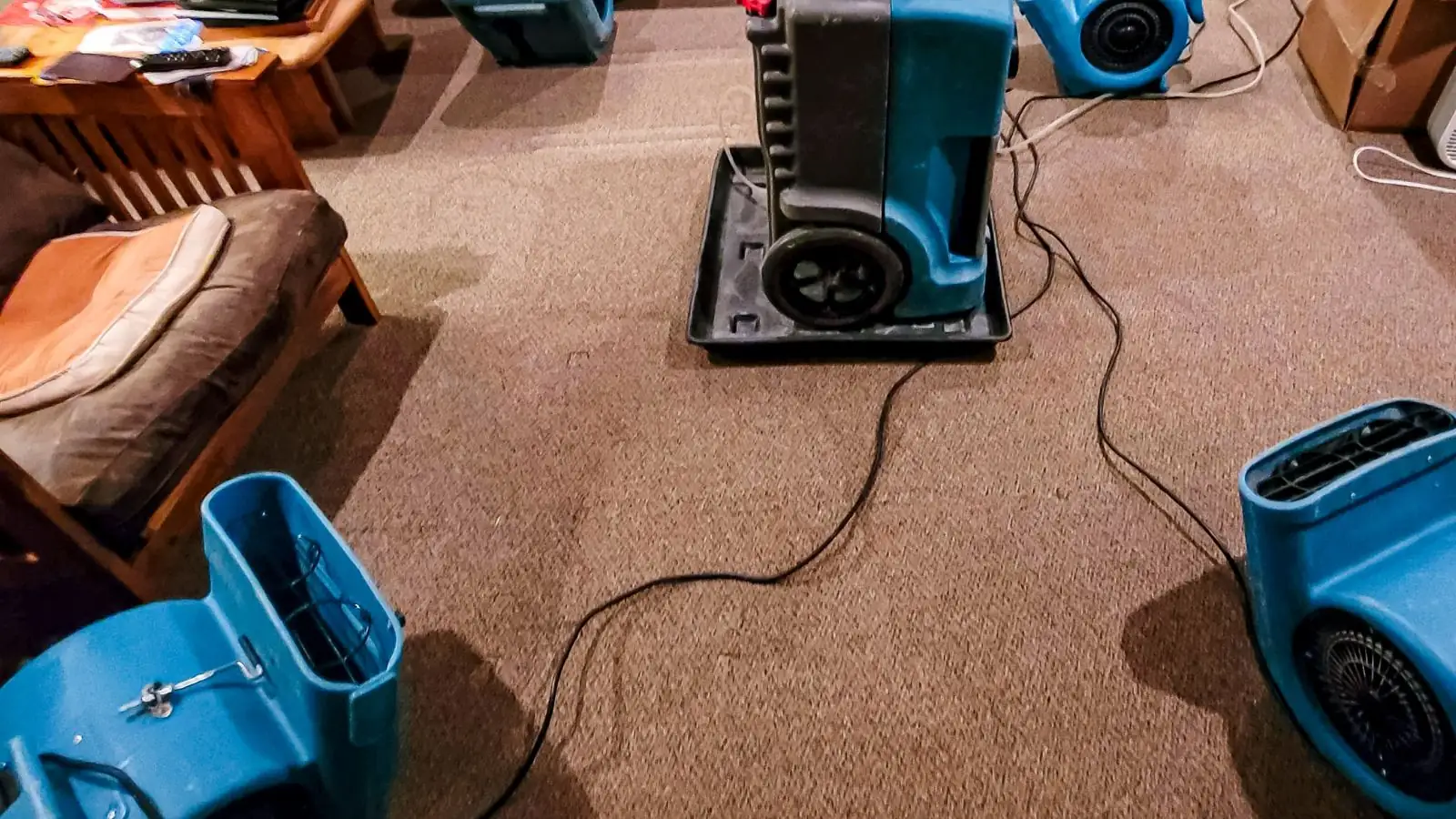
- Equipment placementAir movers are aimed along walls and across floors to push moisture off surfaces. Dehumidifiers pull that moisture out of the air and drain it away. Drying mats, cavity drying with small holes behind baseboards, and injected air are used where surface airflow cannot reach.
- Daily readingsWe return, take the same readings at the same marked points and record them. Equipment is moved or added based on the numbers.
- Equipment comes offMachines leave when the monitored materials reach the drying goal and hold it.
The Equipment and What Each Piece Does
Air movers push moisture off surfaces. LGR (low grain refrigerant) dehumidifiers chill air to condense water out of it, which suits warm, wet rooms. Desiccant units use a drying wheel and suit cooler rooms and the late stage of a job. The mix often changes partway through.
Drying Goals and Knowing When It Is Done
The published reference for this work is ANSI/IICRC S500, the standard for professional water damage restoration. It describes setting a drying goal by comparing wet materials with the same materials in a dry, unaffected part of the building. You can ask any company how it sets and records that goal.
A reading that is fine for concrete would be wrong for hardwood, so we read your own dry walls and floors first. When framing, subfloor and drywall match the reference for several readings in a row, the job is done. Pulling machines early saves little and invites swelling, odor and mold.
Encinitas Air, Rain and Drying Time
The National Weather Service table for San Diego's Lindbergh Field gauge shows about 85 percent of the rain falling from November through March. That is a San Diego gauge, not an Encinitas one, but it shows when roof and window leaks are most likely. After a winter storm, ask for a moisture check even if the stain looks small.
Outdoor air in a coastal town can be damp, and that matters for one practical reason. Opening windows or running a household fan does not help much if the air outside holds as much moisture as the air inside. While machines run we keep doors and windows closed so they are not fighting outside air.
Tell dispatch which doors and windows have been open. Homeowners in Solana Beach and Carlsbad can call the same line.
Noise, Electricity and Living With the Equipment
Drying equipment is loud. Air movers produce a steady rush of sound, and dehumidifiers add a hum and a lot of warm air. Sleeping near them is hard, so we say so up front.
The machines also draw power, and your electric bill will show it for the days they run. We do not guess at the amount, since it depends on how much equipment is placed and how long it stays. Ask your insurer whether it counts as part of the loss.
What Changes the Cost of Structural Drying
Drying cost follows the scope and the time, not a flat figure. These factors move it most.
- Water category. Clean water, gray water and sewage need different handling.
- Affected area. Size sets how many machines are needed.
- Materials. Hardwood, concrete, plaster and insulation dry at different speeds.
- Drying days and equipment. Heavy absorption means more days and more units on site.
- Rebuild scope. Whatever cannot be saved is handled afterward under water damage repair.
Insurance and Drying Documentation
According to the California Department of Insurance, homeowners and commercial policies typically exclude flood, and flood coverage is a separate federal program. Sudden and accidental damage from a burst pipe is often treated differently from storm flooding or a slow leak. Check your policy or ask your insurer how your loss is classified.
Hiring Help and Avoiding Mistakes
The Contractors State License Board says a license is required for projects of $500 or more in labor and materials, and that a down payment should not exceed 10 percent or $1,000, whichever is less. Check any company at cslb.ca.gov or 800-321-CSLB (2752) and confirm the license covers the work.
- Do not close up walls, lay new flooring or paint until the readings are at goal.
- If wet carpet is part of the loss, see carpet water damage for what usually dries in place and what does not.
Frequently Asked Questions
Dispatch answers 24 hours a day, every day, and we offer same-day response when it is available. We do not promise an arrival time, but call as soon as you see water and say whether it is still spreading.
It depends on the materials, how much water they absorbed and the conditions in the room. Many jobs run several days. The daily readings, not a calendar, decide when equipment comes off.
Without a dehumidifier the moisture stays in the building. Opening windows helps only if the outside air is drier than the inside air, and on a damp coastal day it may not be.
We measure the wet materials and compare them with the same materials in a dry part of your home, following the approach described in ANSI/IICRC S500. The job ends when they reach that goal and hold.
Yes, it will draw power for as long as it runs. We cannot give an amount without knowing the equipment and the days involved. Ask your insurer whether electricity is part of your claim.