
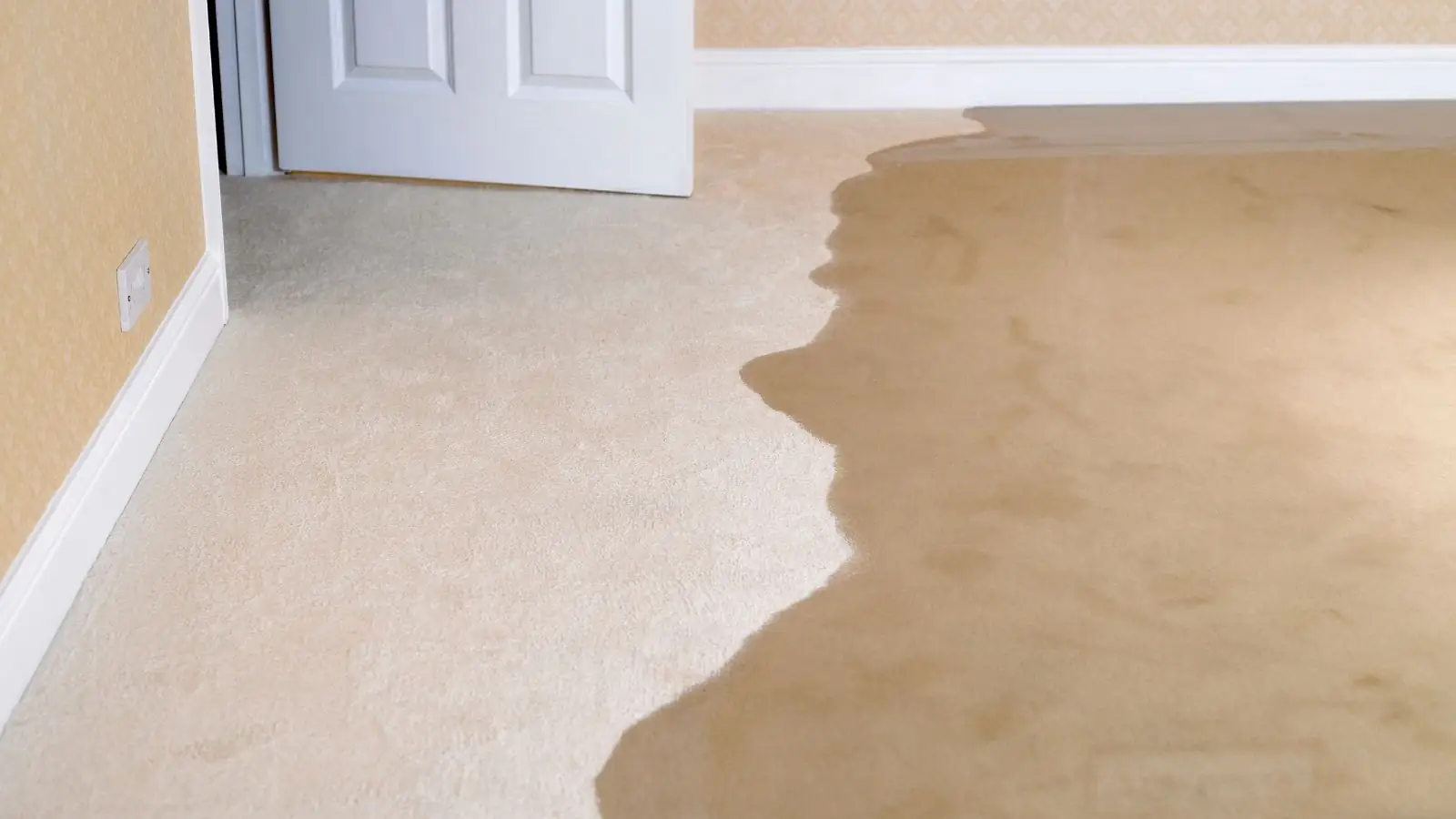
Carpet water damage is what happens when a floor covering and the cushion beneath it take on water from a leak, an overflow or a storm. The carpet face looks like the problem, but the pad underneath soaks up far more and holds it far longer.
Common sources are a failed washing machine hose, an overflowing tub, a leaking water heater, a roof leak, and rain under a door. What the water was, and how long it sat, decides what follows.
Why the Pad Is Usually the Problem
Carpet fibers dry quickly once the water is pulled out. Foam or rebound pad acts like a sponge, and it sits on a slab or plywood that gives the moisture nowhere to go. Water also wicks sideways, so the wet area is often larger than the stain.
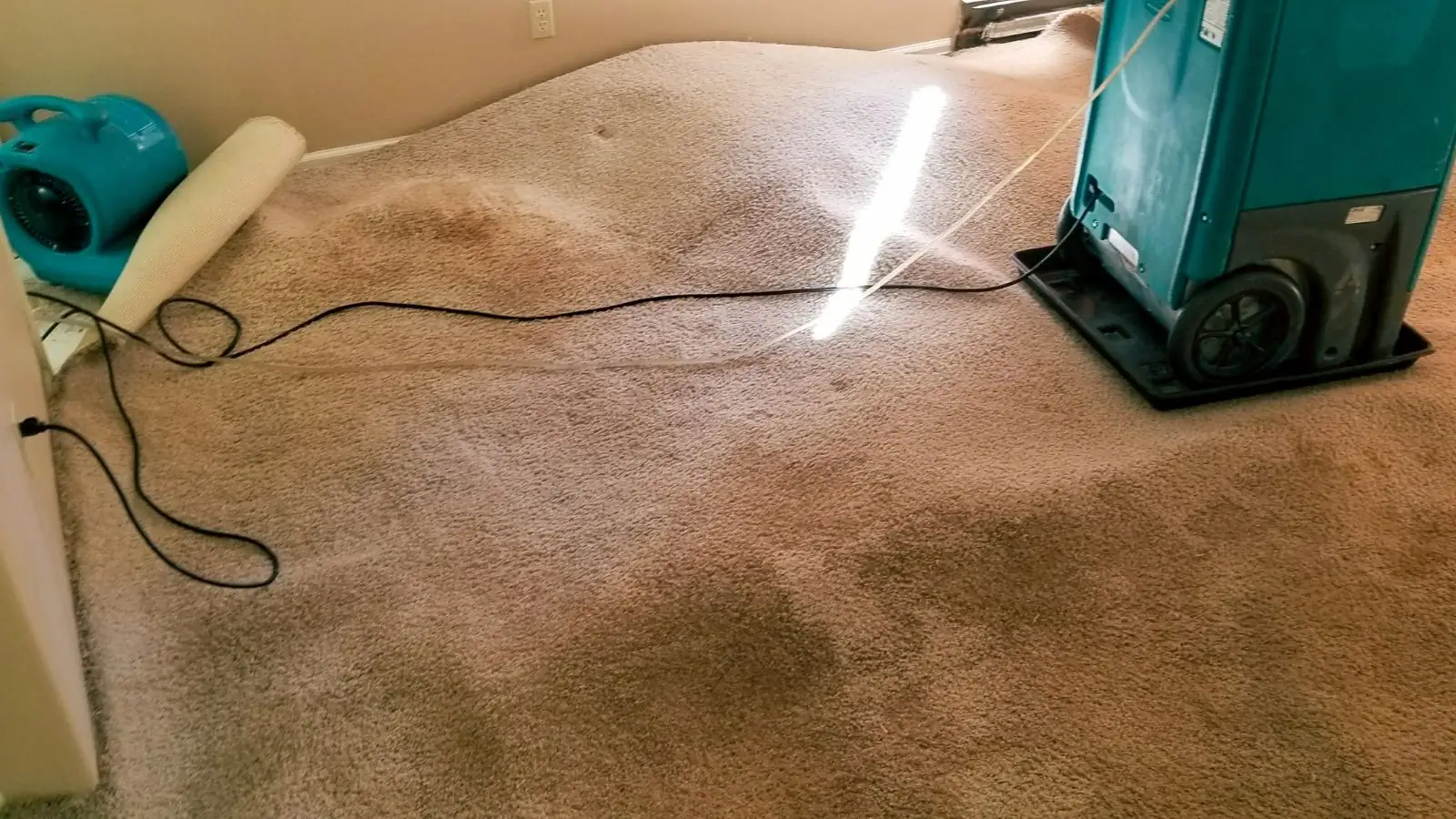
That is why surface drying alone disappoints. A carpet can feel dry on Tuesday and still hide a wet pad that smells by the weekend. We use a moisture meter, not a hand on the fibers.
Standing on a squishy floor right now? Describe the room to dispatch and we will tell you what to do with the carpet while we get to you.
☎ (760) 769-1159What You See and What It Usually Means
| What you see | What it usually means |
|---|---|
| Squishy sound or feel underfoot | The pad is saturated and holding water |
| Dark ring or brown stain spreading outward | Water wicking through the pad, or dirt carried up from below |
| Musty smell days after the spill | The pad or subfloor is still damp |
| Gray, murky or foul-smelling water | Possible contamination, which changes the plan |
Safety Steps in the First Hour
Stop the source first. Close the shutoff valve at the fixture, or the main valve if you cannot find it.
Electrical or gas risk comes first
If water is touching outlets, a panel or appliances, or you smell gas, stay out and call the utility or 911 before calling us. Cut power only if the panel is dry and safe to reach.
If the water may have come from a sewer backup or the toilet, stay off the carpet and keep children and pets away. Contaminated water is a different job, covered below.
- Lift furniture legs off the carpet or slip foil under them to stop stain transfer.
- Remove small items and rugs, and photograph the room first.
- Do not use a household vacuum on wet carpet.
Water Category Decides Whether Carpet Stays
ANSI/IICRC S500 is the published standard that sorts water into categories, and homeowners can ask any company how it applies them. Category 1 is clean supply water, such as a broken line or a tub overflow. Category 2, often called gray water, carries some contamination, like a washing machine discharge. Category 3 includes sewage and rising storm or ground water.
Clean water caught quickly often leaves the carpet worth saving, though the pad may go. Gray water pushes the plan toward removing the pad and cleaning or replacing the carpet. With black water, carpet and pad generally come out, because porous material cannot be reliably cleaned.
Time moves water down the scale, since clean water that sits for days picks up bacteria. Tell dispatch the source and when it started.
Our Process for Wet Carpet
- Find the sourceWe confirm the leak is stopped and place the water in a category.
- Map the moistureMoisture meters and a thermal camera show how far water traveled under the carpet and into the subfloor.
- ExtractA truck-mounted or portable extractor pulls standing water. Weighted extraction wands press water out of the carpet and the pad below.
- Float or lift the carpetOn clean-water jobs we often detach the carpet at a corner and float it on air so it dries in place. The pad is usually removed, since it dries slowly.
- Dry the floor and airAir movers push air across the exposed subfloor and under the lifted carpet. Dehumidifiers pull the moisture out of the room. See our structural drying page for more.
- Check tack strip and subfloorThe tack strip along the walls can hold water and corrode, so we inspect it and meter the slab or plywood.
- Replace the pad and re-stretchOnce dry, a new pad goes down and the carpet is power-stretched back to tension, or replaced if it did not survive.
Odor control follows the drying. Damp pad holds smell, so we treat the fibers and subfloor surface before the room is closed up.
When the Carpet Comes Out Instead
Some jobs do not suit drying in place. Contaminated water, a soak that lasted several days, glued-down carpet over a slab, and a delaminating backing usually end with removal.
General guidance across the industry is that the first 48 to 72 hours matter most for wet carpet. It is not a deadline or a promise, and every home is different. The sooner the water is out, the more options you keep.
Rain and Flooding in Encinitas Carpet Cases
The city's hazard mitigation plan, hosted by San Diego County, describes a chronic history of rainwater flooding in parts of Leucadia. If you live there, carpet near exterior doors is where storm water shows up first. Water that came in from outside is treated as contaminated until proven otherwise.
The National Weather Service table for San Diego's Lindbergh Field gauge shows about 85 percent of annual rain falling from November through March. Check door thresholds and drainage before the first big storm.
We also take calls in nearby towns, including Carlsbad and Solana Beach, with the same carpet approach.
What Changes the Cost of Carpet Water Damage
- Water category. Clean water allows more drying in place. Contaminated water adds removal and cleaning.
- Affected area. A single room and a whole floor are different jobs, and wall edges add scope.
- Materials. Pad type, carpet quality and whether the carpet is glued or stretched in all change the work.
- Drying days and equipment. More wet material means more air movers and dehumidifiers for longer.
- Rebuild scope. Swollen subfloor, damaged baseboards or wet drywall add repair work after drying.
A real number comes only after the damage is measured.
Insurance Fit for Wet Carpet
Sudden and accidental water damage, like a burst line, is often covered by homeowners policies, while a gradual leak under a sink for months often is not. Check your policy or ask your insurer how your loss is classified.
Storm flooding is a different matter. The California Department of Insurance says homeowners and commercial policies typically exclude flood, and flood insurance comes from the federal National Flood Insurance Program. Photos and moisture readings give your adjuster something concrete.
Mistakes to Avoid With Wet Carpet
- Running a fan across the surface while the pad stays wet.
- Walking on soaked carpet, which pushes water deeper.
- Pulling up carpet yourself after a sewer backup, which spreads contamination.
- Hiring without checking a license. The Contractors State License Board lets you look one up at cslb.ca.gov or 800-321-CSLB (2752).
Mold is a possible follow-up if materials stay damp, never a certainty. If you suspect it, see our mold remediation page, which follows ANSI/IICRC S520. For general cleanup beyond carpet, our water damage cleanup page covers the rest of the room.
Frequently Asked Questions
Yes. Dispatch answers 24 hours a day, and we offer same-day response when available. We do not promise an arrival time.
Often, if the water was clean and it is removed quickly. The pad usually has to be replaced even when the carpet stays. Contaminated water or a long soak changes that.
Pad absorbs a lot of water, dries slowly and can hold contamination you cannot see.
It depends on the water volume, the pad, the subfloor and the equipment. We stop only when the readings say dry.
Stay off the carpet and call us. Carpet and pad that touched contaminated water are generally removed rather than dried in place.