
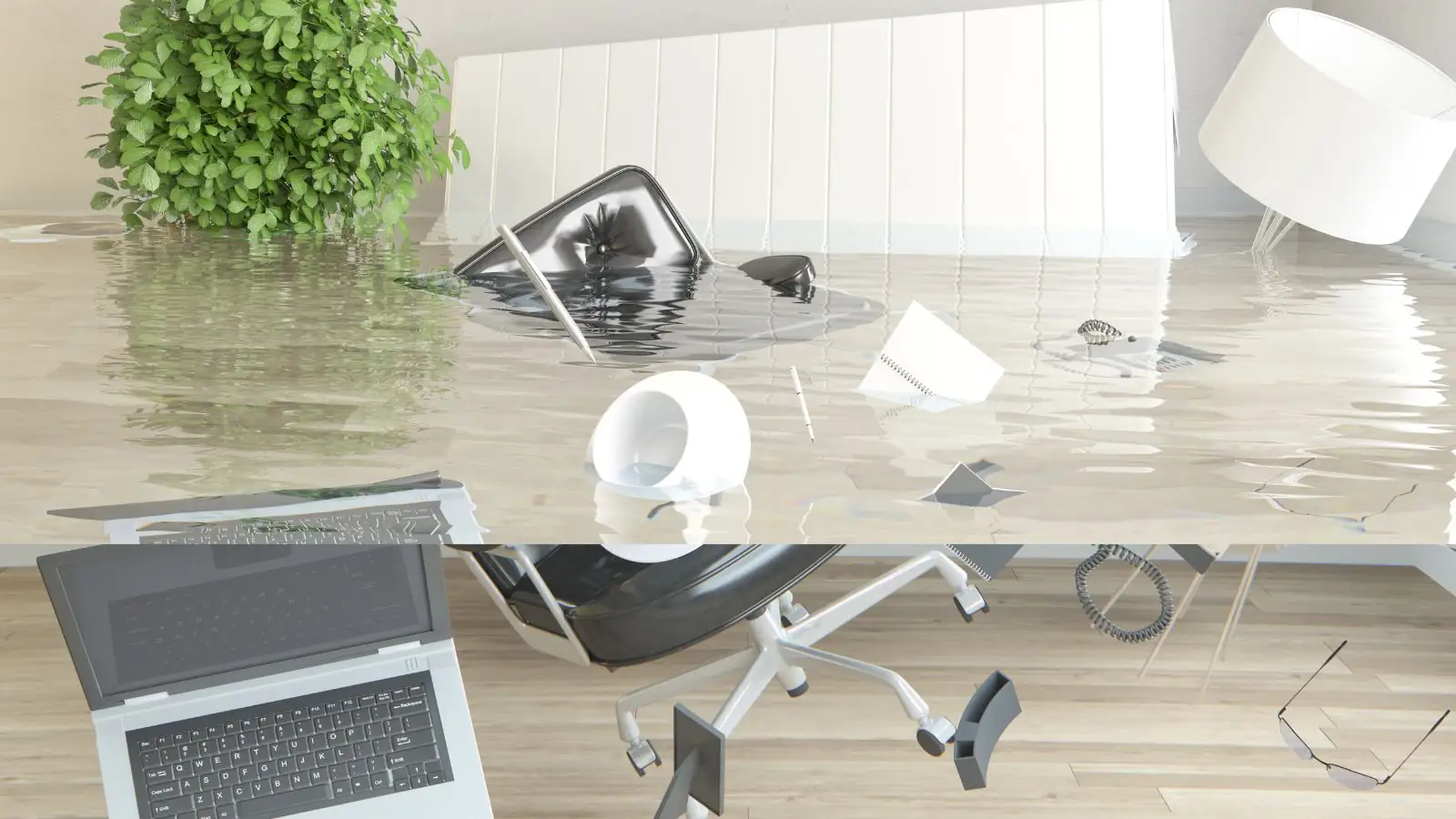
Commercial water damage restoration is the removal of water from a business space, followed by drying, cleanup and a written record of the moisture. It covers the same physical work as a home job, but the schedule is different. A closed door costs money every hour, so the plan has to fit around your operating hours.
If water is spreading through your space now, call (760) 769-1159. Dispatch is open 24/7, and same-day response is offered when available.
How water gets into a business space
Most commercial losses start with a handful of sources. A supply line fails, a fire sprinkler head is knocked or leaks, a water heater tank gives out, a roof seam opens in heavy rain, or a drain backs up into a restroom.
Storm water is a separate case. San Diego's long-term Lindbergh Field gauge records about 85 percent of its rain from November through March, so roof and door-threshold leaks tend to show up in those months. After any storm, check ceiling tiles and the base of exterior walls before you lock up.
What the water is matters as much as where it came from. Clean supply water is the simplest to dry. Water that has touched a drain, a floor surface for a long time or a storm gutter is treated as contaminated, and more material usually has to come out.
Standing in a wet suite and not sure who to phone first? Tell dispatch what you see and we will sort out the next safe step with you.
☎ (760) 769-1159What you see and what it usually means
| What you see | What it often means |
|---|---|
| Stained or sagging ceiling tile | Water is sitting above the tile. Keep people out from under it and call us before it drops. |
| Wet carpet that squishes underfoot | Water has reached the pad and possibly the slab. The pad is rarely worth saving. |
| Musty smell in a closed room | Moisture is trapped behind a finished surface. Find it before it spreads. |
| Water stain on a wall that grows overnight | The source is probably still active. Stop it first if you can do so safely. |
First-hour safety steps
Electrical or gas risk comes first
If water is touching outlets, a panel, a server rack or equipment, stay out of the room. If you smell gas or see sparks, leave the building and call the utility or 911 before you call us.
Cut power to a wet area only if the panel is dry and you can reach it without stepping in water. If you cannot, leave it alone and ask an electrician or the utility.
- Get people out of wet areas and away from sagging ceilings.
- Find the shut-off for the water supply and close it if the source is a supply line or fixture. Ask the property manager if the valve is not in your suite.
- Move small, valuable or paper items up onto dry surfaces.
- Take photos and short video of the damage before anything is moved, with the date visible if you can.
- Call (760) 769-1159 and tell dispatch where the water came from, which rooms it has reached and whether the power is on.
How we handle a commercial job
- Safety and source checkWe confirm the water is stopped or being controlled, note any electrical concerns and walk the space with you.
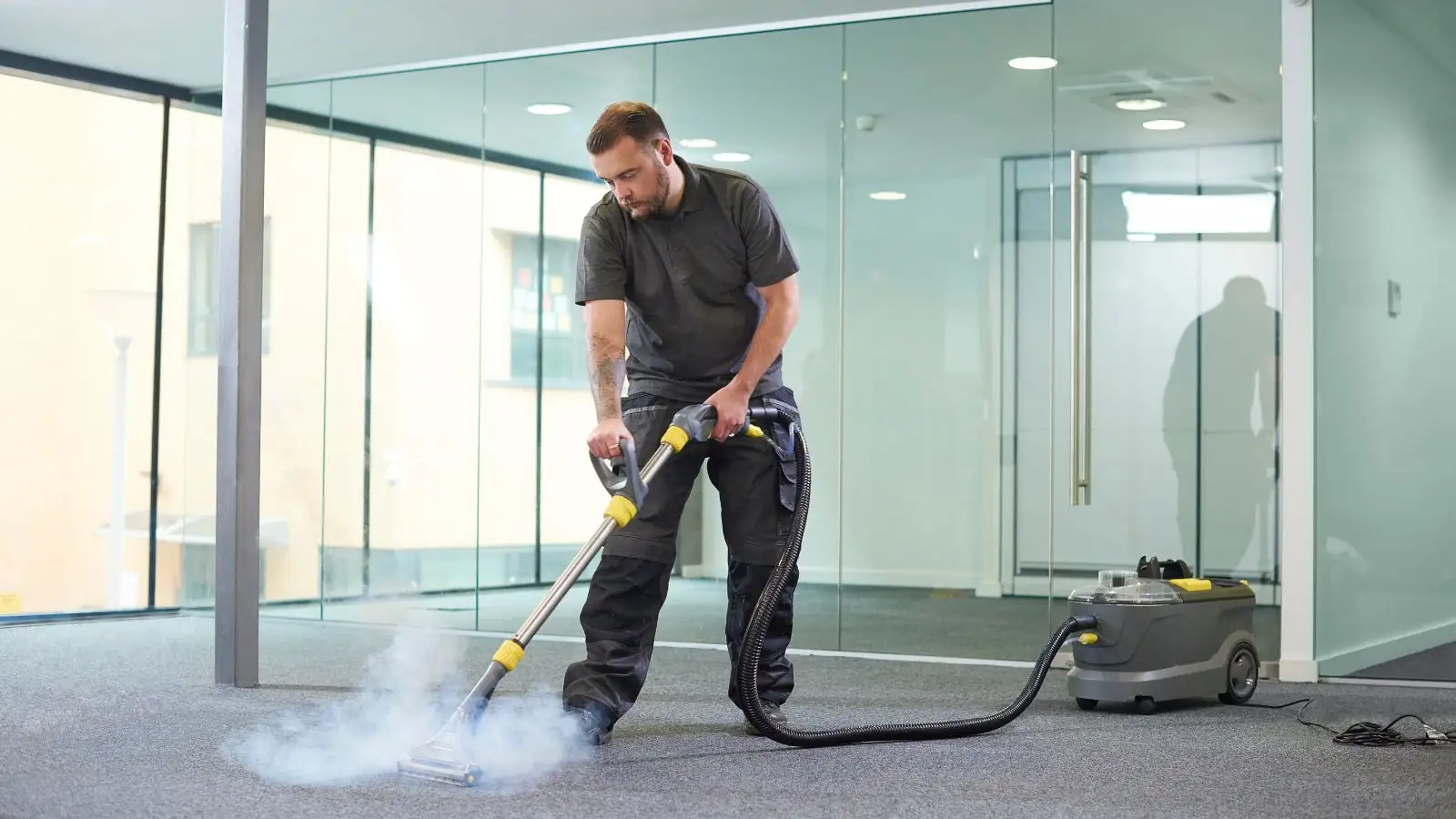
- ExtractionPumps and extraction units pull standing water off hard floors and out of carpet. For heavy pumping, see emergency water removal.
- Moisture mappingMoisture meters and a thermal camera show how far the water traveled into walls, ceilings and the slab.
- Removal and cleanupWet pad, saturated board and contaminated materials are cut out and bagged. Hard surfaces are cleaned.
- DryingAir movers and dehumidifiers run until readings reach the dry standard. The method is explained under structural drying.
- DocumentationWe record readings at the start and during drying, so you and your insurer have a written trail.
We describe the scope and explain the price before work begins. We stage equipment and cleanup around your hours, and tell you which rooms can stay in use during drying.
Landlords, tenants and who calls whom
Who reports the loss, who pays and who may authorize work depends on your lease. We cannot answer that for your building. Read the lease, ask your property manager and ask your insurer, and do not wait on that conversation before you stop the water.
Flood exposure for Encinitas commercial buildings
The City of Encinitas hazard mitigation plan counts 138 commercial buildings in the 100-year flood exposure area and 155 in the 500-year area. It also says the city takes part in the National Flood Insurance Program. If you own or lease a building, ask the property manager whether its location has been checked against the flood map, and keep a set of dated photos of the floors.
What changes the cost
Pricing follows the scope of the job, not a flat rate. These factors move it most.
- Water category. Clean, gray and contaminated water need different removal and cleaning steps.
- Affected area. The number of rooms and the floor area the water reached.
- Materials involved. Carpet, tile, laminate, drywall, ceiling tile and insulation are handled differently.
- Drying days and equipment. Wet slabs and dense materials need more equipment and more days.
- Rebuild scope. Removal and drying are one scope. Replacing finishes after drying is another.
Ask dispatch for an assessment and the price will be based on measurements, not a phone guess.
Insurance fit for a business loss
Sudden and accidental water damage, such as a burst pipe, is often treated differently from a slow leak or neglect. Check your policy or ask your insurer how your loss is classified. If a lease assigns insurance duties, read what it says about your part and the owner's.
The California Department of Insurance says homeowners and commercial policies typically exclude flood, mudslide and debris flow. Flood coverage is the federal National Flood Insurance Program, which the department does not regulate. A new NFIP policy typically takes effect 30 days after purchase, so it has to be in place before the storm.
We document the damage in writing, but we do not promise approval or a payout.
Hiring and permit questions
The Contractors State License Board says a license is required for projects of $500 or more in combined labor and material. It also caps a down payment at 10 percent or $1,000, whichever is less. Check any contractor at cslb.ca.gov or 800-321-CSLB (2752), and confirm the license covers the type of work.
Permits are a separate question. Ask the Encinitas Building Division whether your repair needs a permit by calling 760-633-2730. For a larger flood loss, read our flood damage restoration page, and note we also take calls from Carlsbad and Solana Beach.
Mistakes to avoid
- Waiting for a lease or insurance answer before stopping the water.
- Running a household vacuum or plugged-in fans over a wet floor.
- Assuming the space is dry because the surface feels dry.
ANSI/IICRC S500 is the published standard for water damage restoration, and you can ask any company whether its crews work to it.
Frequently Asked Questions
Yes. Dispatch answers 24/7, including nights, weekends and holidays, and same-day response is offered when available. We do not promise an arrival time, but the first call covers safe steps, what to photograph and what to leave alone.
We plan extraction, equipment setup and cleanup around the hours you give us. Drying equipment often runs overnight, so ask which rooms can stay in use.
It depends on the lease. Ask your property manager and your insurer. Do not wait on that answer to stop the water.
Commercial policies typically exclude flood, according to the California Department of Insurance. Flood coverage is the National Flood Insurance Program, which is separate. Check your policy or ask your insurer.
Yes. We record moisture readings at the start and while drying, so you have a written record to share with your insurer or property manager.