
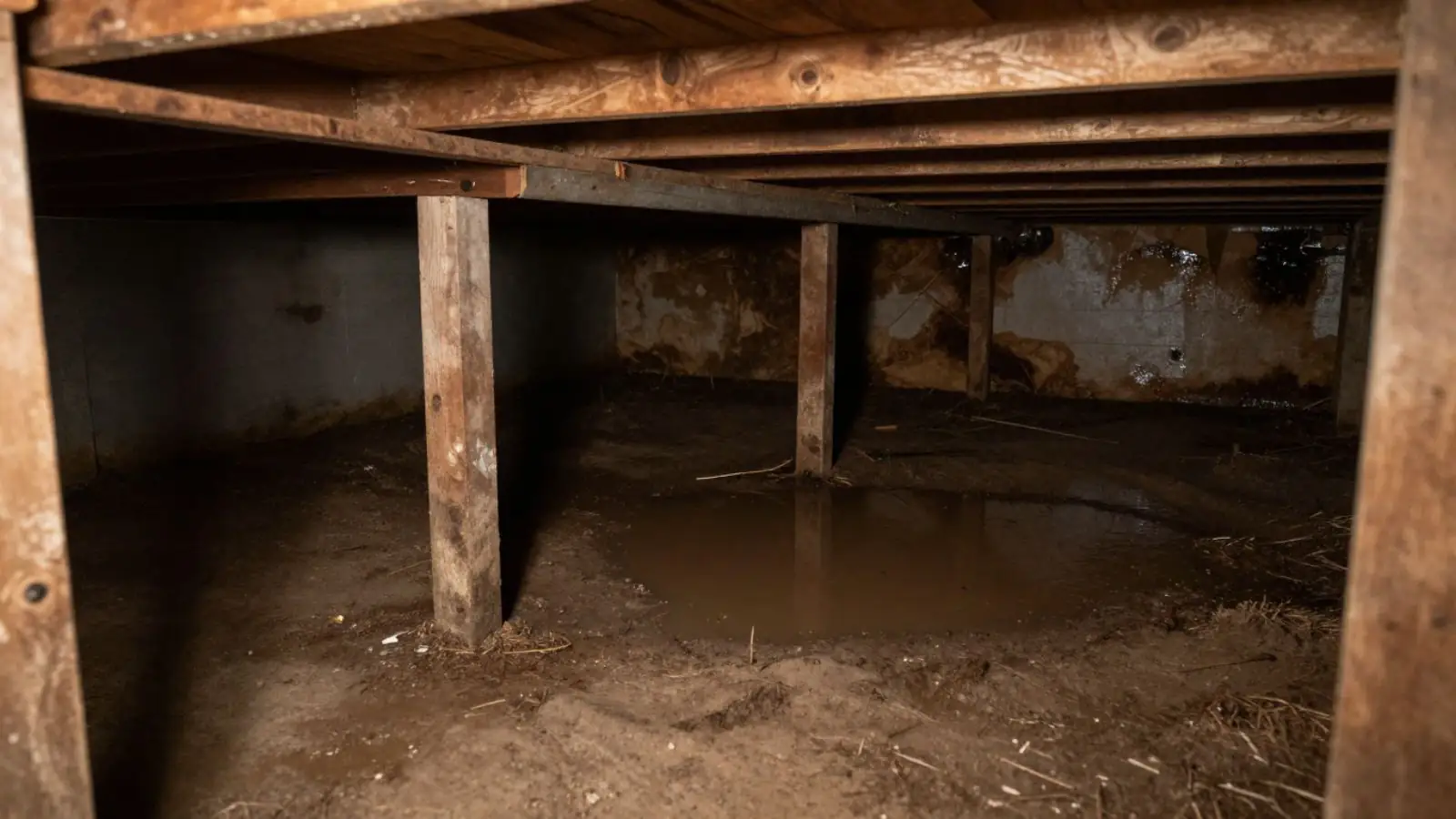
Crawl space water damage is water that collects in the low gap between the ground and the floor framing of a house on a raised foundation. It wets the soil, the joists, the underside of the subfloor, the insulation and any ducts or pipes that run through the space.
If your home has a crawl space and you have found water in it, treat it as an emergency. Our dispatch line is open 24/7, and same-day response is offered when available. We do not have a verified count of how many Encinitas homes have crawl spaces, so this page applies only if yours does.
How water gets under a raised foundation
Most crawl space water comes from one of four places. A supply or drain pipe fails under the floor, a water heater or washing machine line leaks into the gap, rain or runoff finds a way through a vent or foundation opening, or groundwater rises after a long storm.
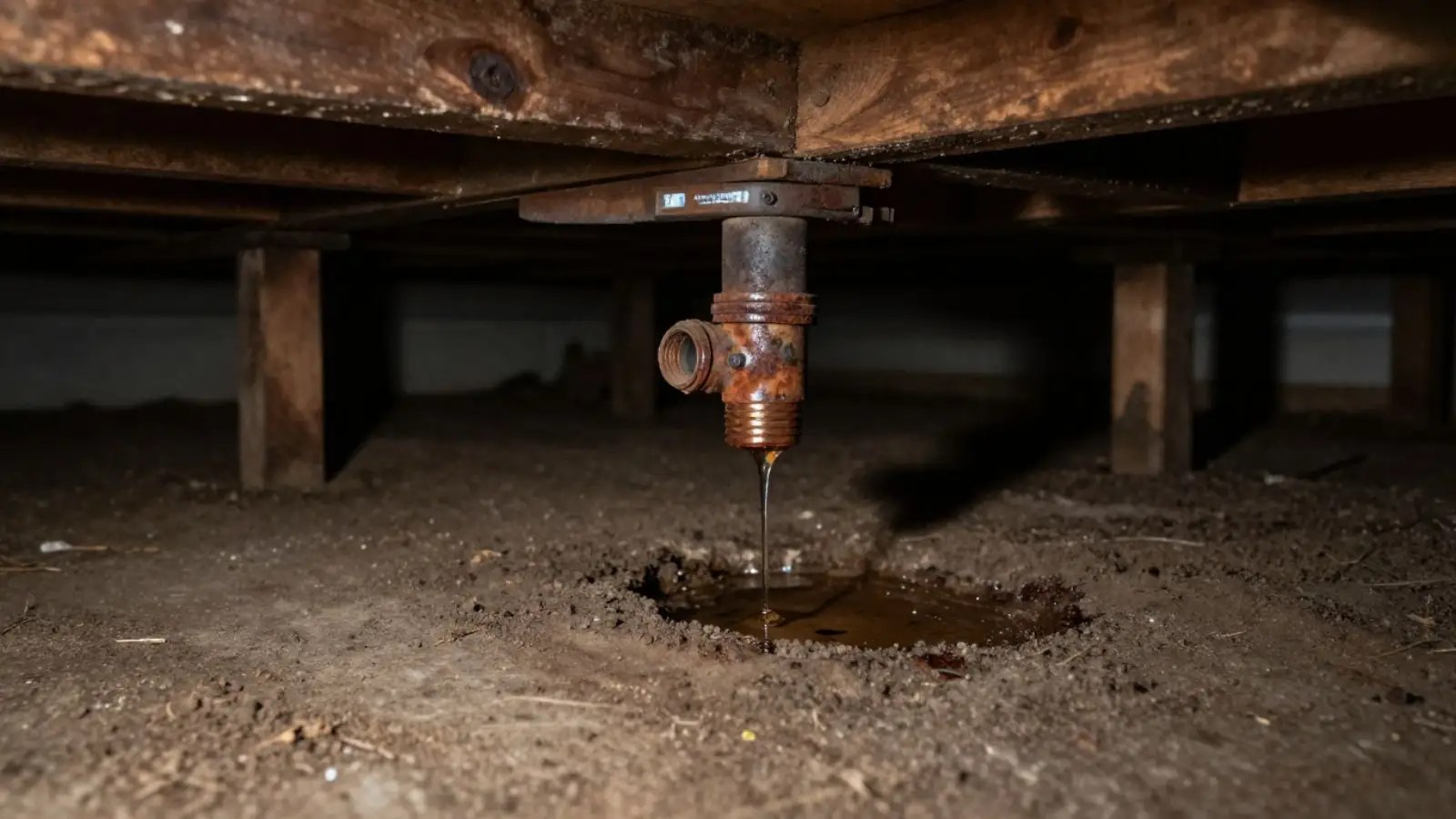
Pipe leaks are usually clean water at first and often stay slow for weeks. Runoff and groundwater carry soil and whatever the ground holds, so we treat them as dirtier from the start. A cracked sewer line under the floor is a different job, and it calls for the sewage steps in our flood damage restoration approach.
Peeked into the crawl space and saw water or sagging insulation? Tell dispatch what you saw and we will say what to leave alone.
☎ (760) 769-1159Signs of crawl space water and what they mean
You often notice the floors before you ever open the access panel. This table matches what people report on the phone with what is usually going on underneath.
| What you see or feel | What it usually means |
|---|---|
| Water or a dark film on the soil | A leak, runoff or groundwater has reached the ground. The depth tells us how it got there. |
| Insulation drooping or sitting on the soil | It has absorbed water and its own weight has pulled it off the joists. |
| Soft, springy or cupped floors above | The subfloor or the underside of the flooring has taken on moisture. |
| Musty smell through floor vents | Damp air or wet material below is moving into the living space. |
| Water meter moving with every tap closed | A supply line is leaking somewhere, and the crawl space is a common place to look. |
| Plastic vapor barrier holding a pool | Water is trapped on top of the sheeting and cannot drain or evaporate. |
First-hour safety steps
Do not enter if the water is deep or wiring is close
A crawl space is a confined, low space with poor light and one way out. Do not crawl in if there is standing water, if you can see wiring, a junction box or a water heater element near the water, or if the space smells of gas or sewage. Look from the access opening with a flashlight instead.
If the panel is dry and you can reach it without stepping in water, switch off the circuits that serve the area. If you see sparks, smell gas or cannot reach the panel safely, leave and call the utility or 911 before you call us.
- Stop the source if you can. Close the main water shut-off if a pipe is leaking, and stop using washers and dishwashers.
- Keep children and pets away from the access panel and from any wet floor that feels weak.
- Photograph the water level, the insulation and any visible damage from the opening before anything changes.
- Call (760) 769-1159 and tell dispatch where the access is, how deep the water looks and what is nearby.
How we handle a wet crawl space
- Assess and protectWe check access, lighting, electrical exposure and the water depth, then wear protective gear suited to the water type.
- ExtractSubmersible pumps and wet vacuums move water out through hoses to a safe discharge point. Deeper pooling follows the same method described on our emergency water removal page.
- Remove what will not drySaturated fiberglass insulation, torn vapor barrier and any muddy debris come out and are bagged.
- Dry the structureAir movers and dehumidifiers dry the joists and subfloor, sometimes with ducted air so the equipment can sit outside the tight space. A moisture meter on the wood tells us when it is done, as covered in structural drying.
- Document and hand offWe note readings and photos for you and your insurer, and and say what comes next.
Rain, creeks and Leucadia runoff
The City of Encinitas hazard mitigation plan describes a chronic history of rainwater flooding in parts of Leucadia. If your raised home is in a low pocket like that, water can reach the ground under the floor well before it reaches the front door. After a heavy storm, look through the access panel from outside once the rain eases.
The same plan names Escondido, Encinitas and Cottonwood Creeks among the flood-prone areas, along with low-lying parts of Old Encinitas.
San Diego's Lindbergh Field gauge shows about 9.5 inches of rain in an average year, with roughly 85 percent falling from November through March. That is a San Diego station, not an Encinitas measurement. Check drainage and vents before November.
What changes the cost
- Water category. Clean pipe water, rain runoff and sewage lead to different removal and protective steps.
- Depth and area. How much of the footprint is wet and how deep the water sits.
- Materials. Insulation, vapor barrier and any wet debris to remove, and whether the lumber is sound.
- Drying days and equipment. Thick joists and a closed space often mean more days of drying.
- Repair scope. Fixing the source and replacing finishes is separate from drying.
Insurance fit
Insurers generally separate sudden and accidental water from gradual leaks and neglect. A pipe that burst last night is often treated differently from a seep that ran for months, and the date of the first sign matters, so photograph early. Check your policy or ask your insurer how it classifies each cause.
Rain, runoff and rising groundwater are another category. The California Department of Insurance says homeowners policies typically exclude flood, and flood coverage comes through the federal National Flood Insurance Program or a separate policy. We document conditions and do not promise approval or bill insurers directly.
Mistakes to avoid
- Entering a flooded crawl space to see how bad it is, especially with wiring in reach.
- Covering a damp floor with new flooring before the framing has been measured.
If water keeps returning, a drainage or foundation contractor handles the cause. Confirm any contractor's license on the Contractors State License Board site, cslb.ca.gov, and ask about the S500 standard, ANSI/IICRC S500, which describes water damage restoration practice.
Where we work
We take calls from across Encinitas and from nearby towns, including Solana Beach to the south and Carlsbad to the north.
If mold shows up on the joists days later, ask whether your state licenses mold work and whether testing follows ANSI/IICRC S520. Moisture is what mold needs, so drying the framing comes first.
Frequently Asked Questions
Yes. Dispatch answers 24/7, and same-day response is offered when available. We do not promise an arrival time, but the first call covers what is safe to do, what to photograph and what to leave alone.
Not if there is standing water, visible wiring or any odor of gas or sewage. Look from the opening with a flashlight, and call the utility or 911 first for electrical or gas risk.
Often yes. Air movers and dehumidifiers can dry joists and the subfloor from below, and moisture readings show whether it is working.
Soaked, sagging fiberglass insulation is usually removed because it holds water against the wood.
No. We remove water and dry the structure. Fixing a pipe, a vent opening, grading or drainage belongs to a plumber or a licensed contractor, and we can tell you which one the evidence points to.