
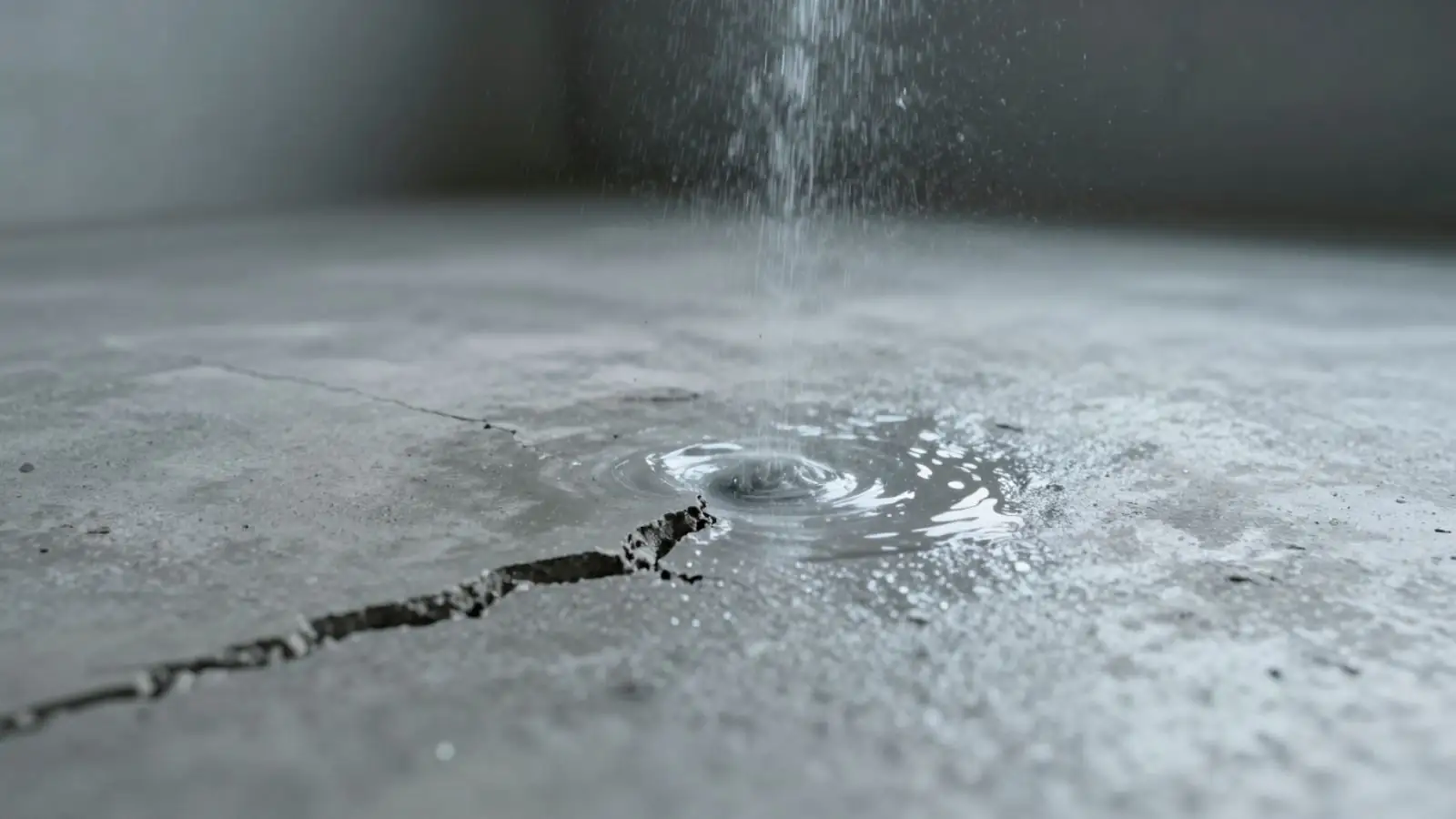
A slab leak is a leak in a water line that runs under or inside a concrete foundation slab. The pipe is pressurized, so it keeps pushing water out until the supply is closed. It can rise through cracks and joints or spread sideways under the slab.
This page is for homes built on a slab. We do not have a verified count of how many Encinitas homes sit on slab foundations, and we do not have local figures on how often slab leaks happen here. So everything below is conditional: if your home sits on a slab and you suspect a leak under it, this is how the cleanup works.
How Water Under a Slab Ends Up Inside Your Home
In a slab home, supply lines can run beneath the concrete or through it on the way to a bathroom, kitchen or water heater. A pinhole, a failed joint or a worn fitting lets water out, and the soil under the slab takes it first. Then the water follows the easiest path, often a crack, a joint or the edge where the slab meets a wall.
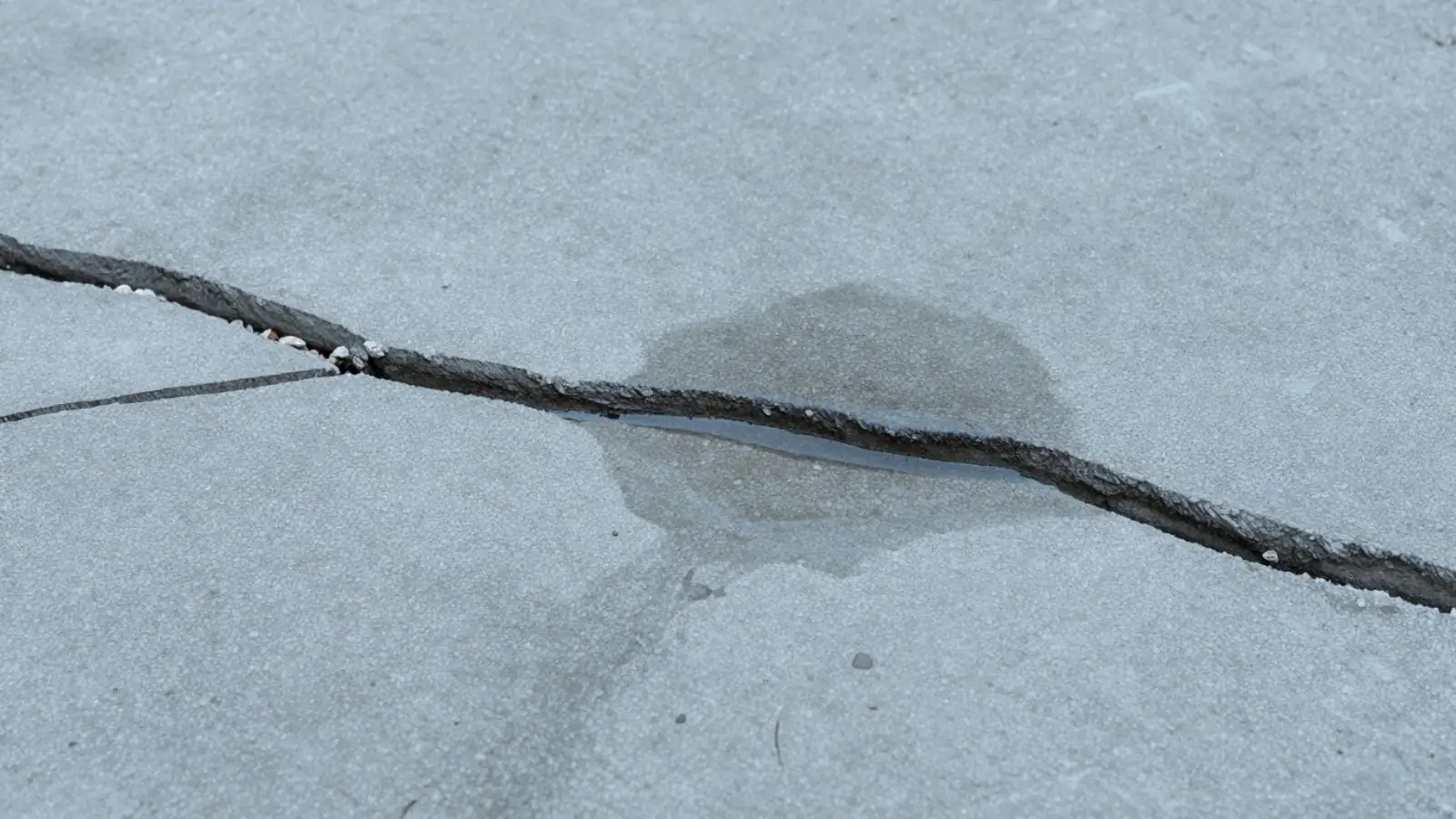
The damage shows up at floor level and climbs. Flooring over the leak absorbs moisture from below, bottom plates and baseboards wick it upward, and drywall draws it up from the floor line.
If the failed pipe is in a wall, ceiling, attic or crawl space instead, you have the more general case, and our burst pipe water damage page covers it.
Meter still spinning with every fixture off, or a floor that feels oddly warm? Call dispatch, describe what you see, and we will tell you what to do while you wait for a plumber.
☎ (760) 769-1159Signs of a Slab Leak and What They Usually Mean
| What you notice | What it can mean |
|---|---|
| A warm spot on a floor that is not near a heater or vent | A hot water line leaking under that part of the slab |
| The water meter keeps moving with every fixture and appliance off | Water is leaving the system somewhere, and the leak may be under the slab |
| Damp carpet, curling vinyl or floorboards lifting at the seams | Moisture rising from below the flooring |
| Running water sounds with nothing on | A pressurized line is open to the soil or a cavity |
| A water bill that jumps with no change in how you live | Steady loss that has been going on for a while |
None of these proves a slab leak alone. A running toilet or an irrigation fault can move the meter too, so the plumber's test matters.
Safety Steps for the First Hour
Electrical or gas risk comes first
If water is near outlets, a panel, or appliances, or you smell gas, leave the area and call the utility or 911 before you call us. Cut power at the panel only if the panel is dry and you can reach it without stepping through water.
- Check the meter. Turn off every fixture and appliance, then watch the dial or low-flow indicator. If it keeps moving, water is leaking somewhere.
- Close the main shut-off valve for the house. That stops the leak from feeding more water under the slab.
- Call a licensed plumber who does leak detection. Finding and repairing the line is their work.
- Call us so drying can start as soon as the water source is stopped.
Who Does What: Plumber First, Then Our Drying Work
We do not locate leaks. A plumber uses acoustic listening gear, pressure tests or thermal tools to find the failed line, then repairs or reroutes it. That repair may involve opening the floor, and slab work can also bring the question of permits.
Ask the Encinitas Building Division whether your plumbing repair needs a permit. The division is part of Development Services at 505 S. Vulcan Ave, and you can reach it at 760-633-2730 or [email protected].
Our Drying and Restoration Process
- Assess and map the moistureA technician checks flooring, bottom plates and wall bases with moisture meters and uses thermal imaging to show where cold, wet areas sit.
- Remove what cannot dryWet carpet pad, swollen laminate and soaked baseboards come out. Drywall is cut back to dry, firm material above the wet line.
- Dry the structureAir movers and dehumidifiers run on the affected rooms, and floor drying mats can pull moisture from some flooring types. Daily readings show whether the drying is on track.
- Verify dry and hand offWe confirm readings against dry reference points before closing anything up. Rebuilding is a separate stage, covered on our water damage repair page.
ANSI/IICRC S500 is the published standard for professional water damage restoration, and you can ask any company about it. Our structural drying page explains the monitoring in more detail.
Flooring Over a Slab and What Happens to It
- Carpet and pad. The pad usually goes, and the carpet may be saved if the water was clean and caught quickly.
- Laminate and vinyl plank. Swollen seams and cores rarely return to shape, and trapped moisture below can hold against the backing.
- Tile. Tile itself tolerates water, but grout, mortar bed and subfloor-adjacent materials can still hold moisture, and the plumber's access cut may be through it.
What Changes the Cost
Slab leak cleanup cost depends on the scope of the wet area and the rebuild afterward.
- Water category. A clean supply line is simpler than contaminated water.
- Affected area. One room and a run of connected rooms are different jobs.
- Flooring and materials. Carpet, laminate, wood and tile each come out and dry differently.
- Drying days and equipment. More wet material and slower drying mean more equipment and more days.
Insurance and the Slab Leak Claim
Insurers often treat sudden and accidental water damage differently from a leak that went on slowly for a long time. Check your policy or ask your insurer how your loss is classified before work starts.
A slab leak is a plumbing failure, not a flood. According to the California Department of Insurance, homeowners and commercial policies typically exclude flood, and flood coverage comes through the federal National Flood Insurance Program, which the department does not regulate. Keep your plumber report and receipts.
Choosing Who Works on Your Home
The Contractors State License Board says a contractor license is required for projects of $500 or more in combined labor and material. It also caps a down payment at 10 percent or $1,000, whichever is less. Check any plumber or contractor at cslb.ca.gov or 800-321-CSLB (2752), and confirm the license covers the type of work.
Your water bill may also help. The City of Encinitas Utilities page says San Dieguito Water District serves Cardiff, Old Encinitas, Leucadia and part of New Encinitas, and points people to its MyEncinitas map to find the provider for an address. If the meter keeps moving with everything off, tell that district.
We also take calls from nearby towns, including Carlsbad and Solana Beach.
Mistakes to Avoid
- Waiting to see if the warm spot goes away. The line keeps running.
Frequently Asked Questions
Yes. Dispatch answers 24 hours a day, and same-day response is offered when it is available. We cannot promise an arrival time, but we can tell you what to do while you wait.
Common signs are a warm spot on the floor, a meter that keeps moving with everything off, damp flooring, the sound of running water and a bill that rises without explanation. A plumber's testing confirms it.
No. A plumber locates and repairs the line. We handle the drying and restoration of the flooring, walls and structure the water reached.
It depends on the policy and on whether the loss was sudden or gradual. Check your policy or ask your insurer, and keep photos, the plumber report and receipts.
Ask the Encinitas Building Division at 760-633-2730. The answer depends on the work being done.