
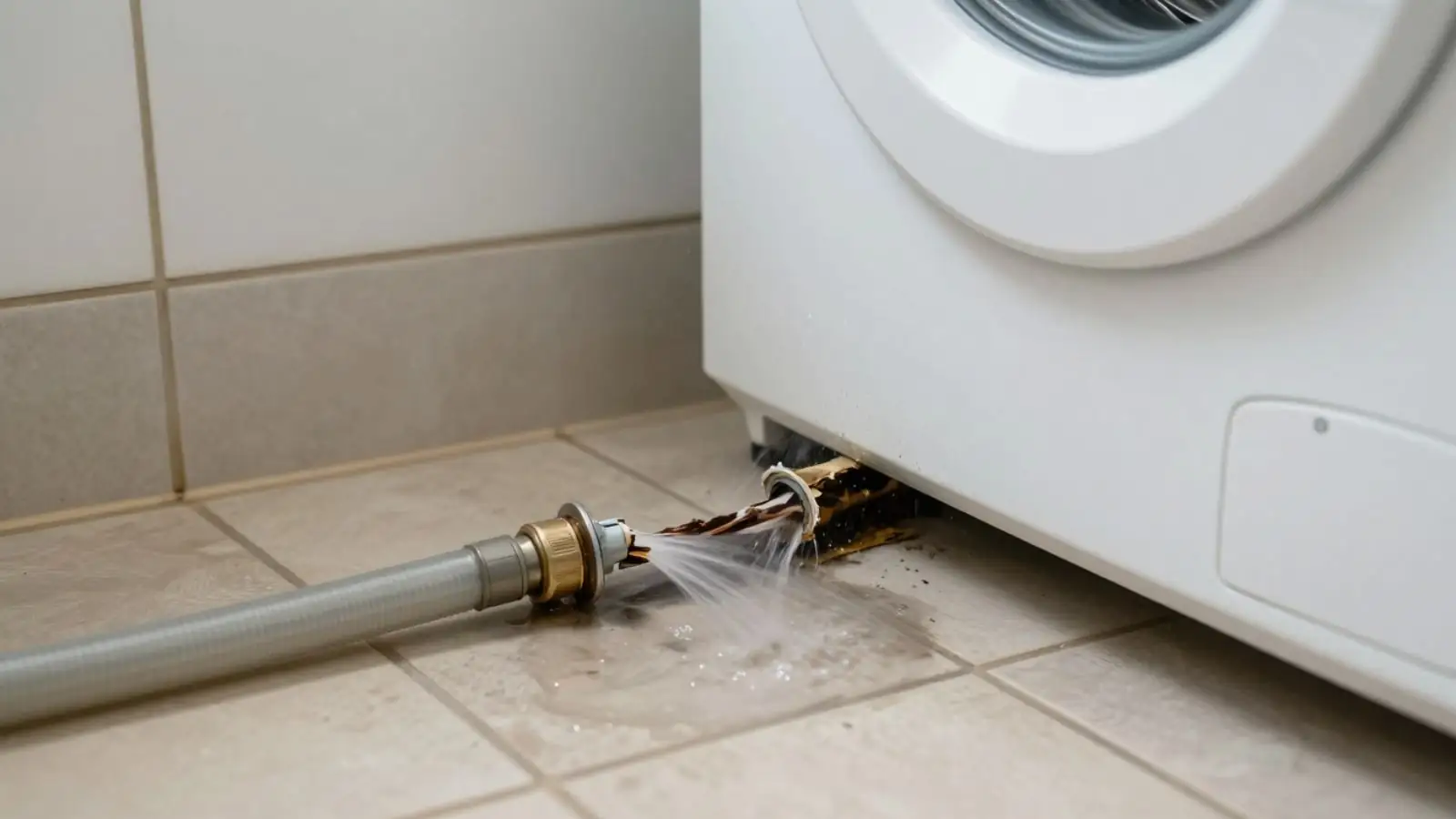
Appliance leak water damage starts at a machine that holds or moves water: a washing machine, a dishwasher, or a refrigerator with an ice maker or water dispenser. The water gets out through a hose, a valve, a door seal or a drain connection, then spreads under and around the appliance.
If your home has hardwood, laminate or vinyl plank near these machines, the water often travels under the flooring where you cannot see it. Call us any hour, and if the leak is spreading into other rooms, our water damage cleanup page explains the wider job.
Where Appliance Leaks Come From
Washing machines fail most often at the two supply hoses and the drain hose on the back. Rubber hoses harden and crack with age, and even braided stainless hoses have an inner liner that wears out. A hose that is bulging, rusty at the collar or stiff to the touch is already near the end.
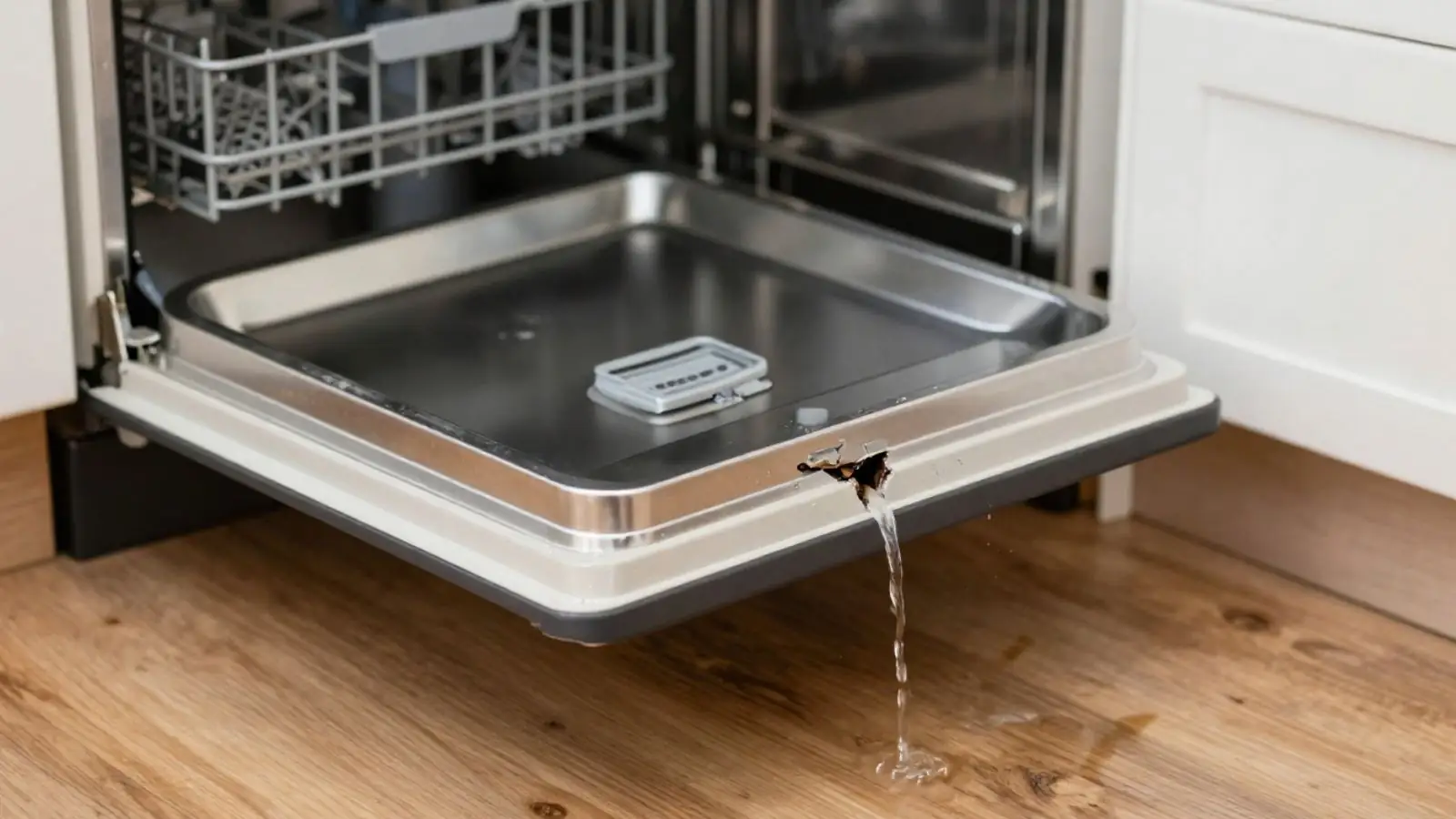
Dishwashers leak at the door seal, the inlet valve and the supply line under the sink side. Refrigerators fail at the thin plastic or copper line feeding the ice maker, which can pinhole or work loose from its fitting and drip for weeks.
Each of these can fail suddenly or leak a little at a time. That difference shapes both the damage and, later, how an insurer reads the claim.
Standing next to a wet washer, dishwasher or fridge and unsure how far the water went? Call dispatch and describe what you see.
☎ (760) 769-1159What You See and What It Usually Means
| What you notice | What it often points to |
|---|---|
| Puddle in front of the washer after a cycle | Failed drain hose, loose clamp or a split inlet hose |
| Floor that feels soft or spongy near the dishwasher | Slow seal or supply leak that has soaked the subfloor |
| Cupped or lifting boards beside the fridge | Ice-maker line leaking under the flooring for some time |
| Musty smell with no visible water | Moisture trapped behind the appliance or under the floor |
First-Hour Safety Steps
Electrical and gas come first
If water has reached an outlet, a power strip or the electrical panel, stay out of the wet area. Call 911 or your electric utility before you call us. If you smell gas near a dryer or range, leave the house and call the gas utility or 911.
- Close the shut-off valve behind the applianceWashers have two hot and cold valves on the wall, dishwashers have a stop valve under the sink, and fridges often have a small valve on the line behind them. Turn clockwise until it stops.
- Stop the water at the main if the valve will not closeThe main shut-off is usually where the line enters the home. The street meter valve is for the utility to operate.
- Unplug the appliance only if the outlet is dryCut power at the breaker if the panel is dry and safe to reach. Never stand in water to do it.
- Call the restoration lineTell dispatch what the appliance is, how long it may have leaked, and what the floor feels like.
In Encinitas, the City of Encinitas Utilities page says San Dieguito Water District serves Cardiff, Old Encinitas, Leucadia and part of New Encinitas. Olivenhain Municipal Water District is listed as a partner agency, so check the city's MyEncinitas map to confirm who serves your address before you call about meter or main-valve trouble.
Slow Leaks Versus Sudden Failures
A burst hose floods a laundry room in minutes, but the damage stays fairly contained if you shut the valve quickly.
A slow leak is quieter and often costlier. Water wicks into the subfloor, swells the underlayment and darkens the wood from below while the top looks fine.
Drying works best early, because trapped moisture that sits for days or weeks may leave materials too damaged to save. If you are not sure how long a leak ran, say so when you call.
How We Handle an Appliance Leak
- Confirm the source is stoppedWe check the valves, hoses and connections so the leak is not still feeding the damage.
- Find the hidden waterMoisture meters read the flooring, baseboards and lower walls. A thermal camera shows cold, wet patches under finished surfaces that look dry.
- Extract standing waterPumps and wet vacuums pull surface water. Carpet pad that soaked through is usually cut and removed.
- Set the drying equipmentAir movers and dehumidifiers run on the wet area. Drying mats can pull moisture up through hardwood, and small holes in the toe-kick or wall base let air reach wet cavities.
- Recheck readings until dryWe read the same spots on return visits and pull equipment only when the numbers match dry reference points.
The published reference is ANSI/IICRC S500, which you can ask any company about. Hidden moisture is the real job, and our structural drying work treats subfloor, wall base and toe-kicks as one wet system. If the machine sat in a kitchen, the kitchen water damage page covers cabinets and layout.
What Changes the Cost
These factors set the scope.
- Water category. Clean supply water is simpler than a washer drain line, which can carry soap and lint.
- Affected area. A damp corner and a wet kitchen-to-hallway run are different jobs.
- Materials involved. Tile, laminate, hardwood and carpet react differently to the same leak.
- Drying days and equipment. More wet material means more equipment for more days.
- Rebuild scope. Some floors dry in place, others need boards, underlayment or baseboard replaced afterward.
Insurance and Appliance Leaks
Insurers often separate sudden and accidental water damage from gradual leakage. A hose that bursts on Tuesday is usually treated differently than a seal that seeped for months, and policies commonly exclude damage from long-term leaks or neglect. Check your policy or ask your insurer how your loss would be classified.
An appliance leak is generally a plumbing event, not a flood. The California Department of Insurance notes that homeowners and commercial policies typically exclude flood, and that flood coverage comes through the federal National Flood Insurance Program, which defines flood as water covering two or more acres or two or more properties. A single machine in one home does not fit that definition, so your standard policy is the one to read.
Hiring Help and Avoiding Mistakes
The Contractors State License Board says a license is required for projects of $500 or more in combined labor and material, and the down payment should not exceed 10 percent or $1,000, whichever is less. You can verify a license at cslb.ca.gov or by calling 800-321-CSLB (2752), and confirm it covers the work. If repairs involve replacing flooring or walls, ask the Encinitas Building Division whether your repair needs a permit.
- Do not keep running the washer or dishwasher to see if it leaks again.
- Do not tear out flooring before the wet area is mapped, since you may remove dry boards and miss wet ones.
To prevent a repeat, replace hoses on a schedule, check the shut-off valves turn freely, and look behind the machines now and then. We take calls from Carlsbad too, and our Carlsbad service page covers that area. Our Solana Beach page does the same for the south side.
Frequently Asked Questions
Yes. Dispatch answers 24 hours a day, 7 days a week, and we offer same-day response when available. We do not promise an arrival time, so call once the water is off.
Yes. Water can seep under the cabinet base or flooring and wet the subfloor for weeks. Soft flooring, a musty smell or warped boards near the machine are the usual clues.
It is often on the water line behind or beside the fridge, or under the nearby sink. If you cannot find it, close the main shut-off and call dispatch.
It depends on your policy and on whether the leak was sudden or gradual. Sudden failures are often treated differently from long-term seepage. Check your policy and ask your insurer.