
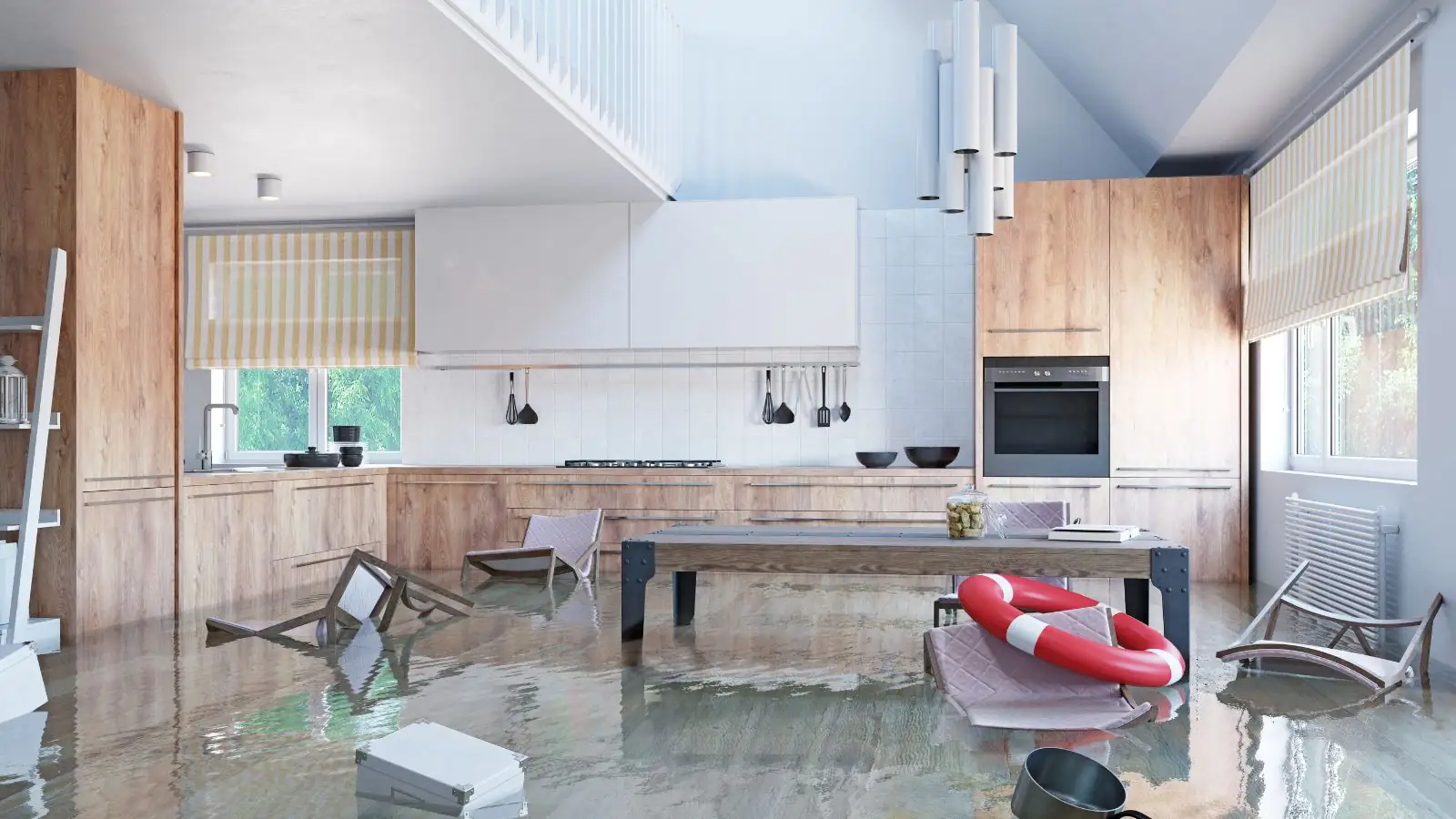
Kitchen water damage is water that escapes from a fixture or line and soaks the cabinets, floor, walls and the hidden spaces around them.
Most of the harm is out of sight. Water runs under the cabinet boxes and into the toe-kick space, where it can sit for days. If you can see a puddle, assume there is more behind it.
How Water Gets Into a Kitchen
Most kitchen losses start under the sink. A braided supply line under the faucet can split at the crimp, a compression nut can work loose, and a drain trap can crack or lose a washer.
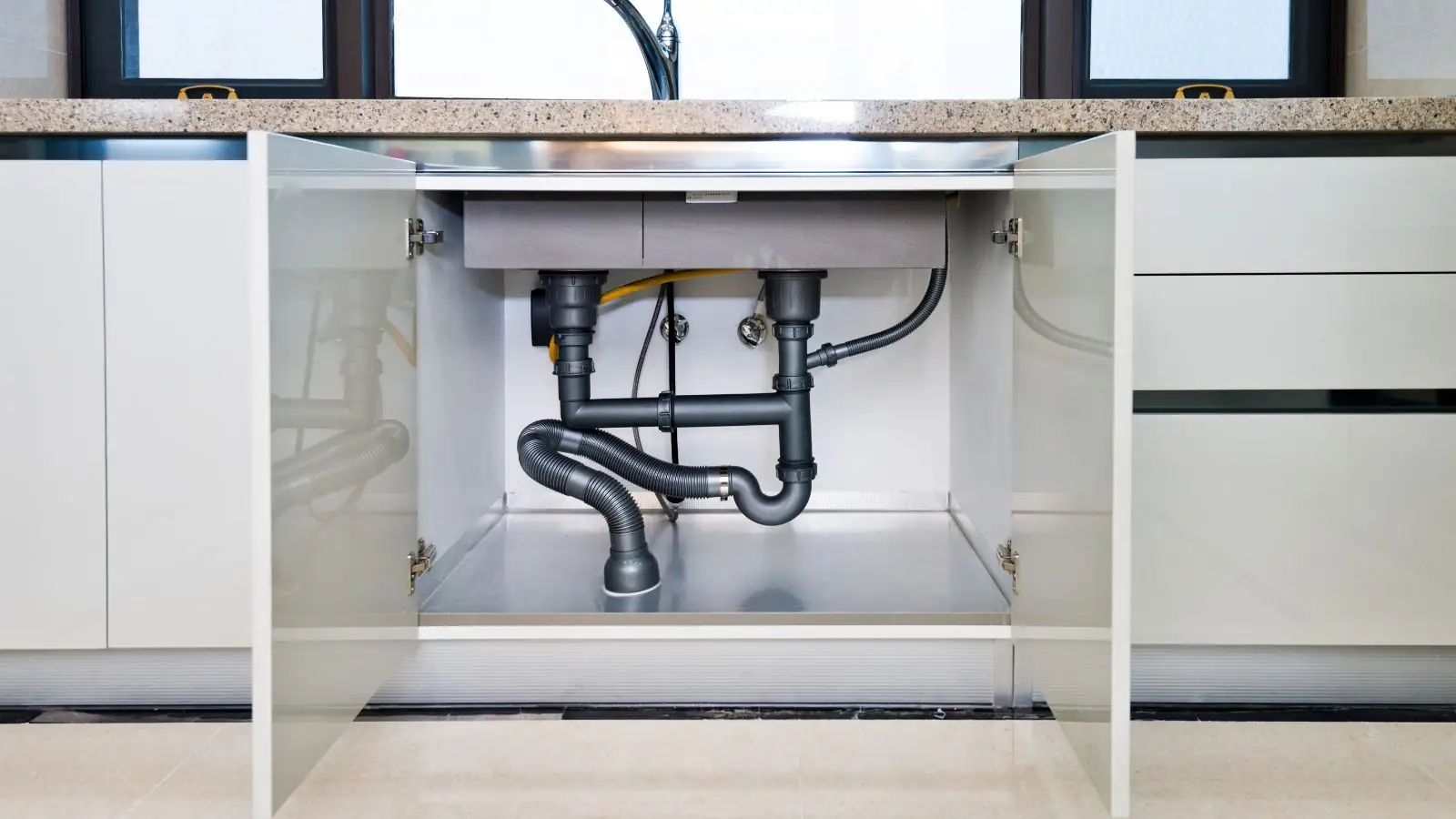
The dishwasher is the next suspect, since its inlet valve, drain hose and door gasket can all fail out of sight. An ice-maker line behind the refrigerator can leak for weeks from a small nick.
Leaks tied to the appliance itself are covered on our appliance leak page, which looks at causes across the whole home. This page is about the room itself.
Water pooled by the dishwasher or a cabinet floor that feels soft? Describe the kitchen to dispatch and we will tell you what to do while you wait.
☎ (760) 769-1159Where the Water Goes Under the Cabinets
Cabinet boxes sit on a base frame or directly on the floor, and a gap runs behind and beneath them. Water moves into that gap by gravity and by wicking. It follows the lowest path and spreads under the neighboring cabinets.
Particleboard bases soak it up like a sponge. The bottom shelf and the toe-kick board swell first because they sit closest to the floor. Solid wood and plywood boxes tolerate a brief soaking much better, and doors and drawer fronts are often fine even when the box beneath them is ruined.
What You See and What It Usually Means
| What you see | What it often means |
|---|---|
| Swollen or peeling toe-kick | Water has been under the cabinet base long enough to soak the board. |
| Cabinet floor that feels soft or spongy | The bottom panel is saturated, often from a slow drain or supply leak. |
| Musty smell with no visible puddle | Water is trapped inside the cabinet cavity or behind a wall. |
First-Hour Safety Steps
Electricity and standing water
If water has reached outlets, the range, the dishwasher plug or the electrical panel, stay out of the wet area.
Cut power at the breaker only if the panel is dry and you can reach it without stepping through water. If you smell gas or see sparks, leave the house and call 911 or the utility before calling us.
- Close the shut-off valve under the sink or behind the appliance. If you cannot find it or it will not turn, close the main water valve for the house.
- Photograph the damage, then pull small items out of the lower cabinets and move rugs and chairs out of the room.
- Call us and describe where the water started and where it traveled.
The City of Encinitas Utilities page says San Dieguito Water District serves Cardiff, Old Encinitas, Leucadia and part of New Encinitas. If you cannot shut off the supply at your home, the city's MyEncinitas map shows which water provider serves your address.
How We Dry a Kitchen
We work from the source outward to reach the water you cannot see.
- Stop and confirm the sourceWe confirm the leak is shut off and find the failed part.
- Map the moistureA moisture meter and thermal camera read the boxes, subfloor and nearby walls.
- Extract standing waterWet vacuums remove pooled water from the floor and cabinet interiors.
- Open the hidden spacesWe remove the toe-kick boards so air can reach the cavity under the cabinets.
- Dry with air movers and dehumidifiersAir movers push dry air through the opened cavities while dehumidifiers pull moisture out of the room.
- Recheck and releaseReadings repeat each visit until materials are dry. The IICRC publishes ANSI/IICRC S500, the reference standard for professional water damage restoration, and you can ask any company how it uses it.
Our structural drying page explains the equipment in more detail.
Cabinets and Countertops: What Stays and What Goes
The answer starts with the box, not the door. Doors and drawer fronts can almost always be saved, and the boxes tell the real story.
| Item | Often saved when | Usually replaced when |
|---|---|---|
| Solid wood or plywood boxes | Dried quickly and the panels are still flat and firm | Panels are delaminating or have stayed wet long enough to darken |
| Particleboard boxes | Rarely, and only after a very brief wetting | The base or bottom shelf has swollen or crumbles at the edge |
| Stone and solid-surface counters | Nearly always, since the surface is not harmed | Removed only to reach cabinet bases and then reset |
If the cabinet base must come out, a stone counter may have to be lifted and reset. Discuss that cost before work starts.
What Changes the Cost of Kitchen Water Damage
We do not quote a number without seeing the room. These factors move it most.
- Water category. Clean supply water is simpler than a dishwasher drain backup or a sewer overflow.
- Affected area. One cabinet run differs from a whole kitchen.
- Materials. Each cabinet and floor type dries differently.
- Drying days and equipment. Enclosed cavities need more time.
- Rebuild scope. Replacing bases, floors and finishes comes after drying.
If cabinets or flooring must be replaced, move on to our water damage repair page.
Insurance, Permits and Hiring
Sudden and accidental water damage, such as a burst supply line, is often covered under homeowners insurance. Gradual leaks and neglected maintenance often are not. The California Department of Insurance says homeowners policies typically exclude flood, which is a different thing from a plumbing failure. Check your policy and ask your insurer, and photograph everything before removal.
If cabinets or flooring will be rebuilt, ask the Encinitas Building Division whether the repair needs a permit by calling 760-633-2730. The division is at 505 S. Vulcan Ave and takes applications through the city's online Customer Self Service portal.
The Contractors State License Board says a license is required for projects of $500 or more in combined labor and material. It also says the down payment should not exceed 10 percent or $1,000, whichever is less. You can verify a license at cslb.ca.gov or by calling 800-321-CSLB (2752), and confirm it covers the type of work.
Mistakes to Avoid After a Kitchen Leak
- Wiping the cabinet floor dry and closing the door. The inside stays wet and the smell arrives later.
- Waiting to see whether the cabinet floor will dry on its own.
For prevention, replace old braided supply lines and check under the sink and behind the dishwasher when you clean. We also take calls from homes in Carlsbad and Solana Beach.
Frequently Asked Questions
Yes. Dispatch answers 24 hours a day, and we offer same-day response when available. We cannot promise an arrival time, but we will tell you what to do while you wait, starting with the shut-off valve.
Often the doors and drawer fronts can. The boxes depend on the material and how long they were wet. Solid wood and plywood usually survive a quick drying, while swollen particleboard bases usually do not.
Usually, yes. The toe-kick board hides the space beneath the cabinets, and air has to reach that cavity for it to dry. The boards are removed with care and can often be reinstalled.
It depends on the water category, the materials and how deep the water traveled. Dense cabinets and enclosed cavities take longer than open floor. Readings taken at each visit tell us when the materials are dry, not a calendar.
Not always. Stone and solid-surface counters are rarely harmed by water, but they may need to be lifted and reset if the cabinet base beneath has to be replaced. Laminate with a swollen core usually does not recover.