
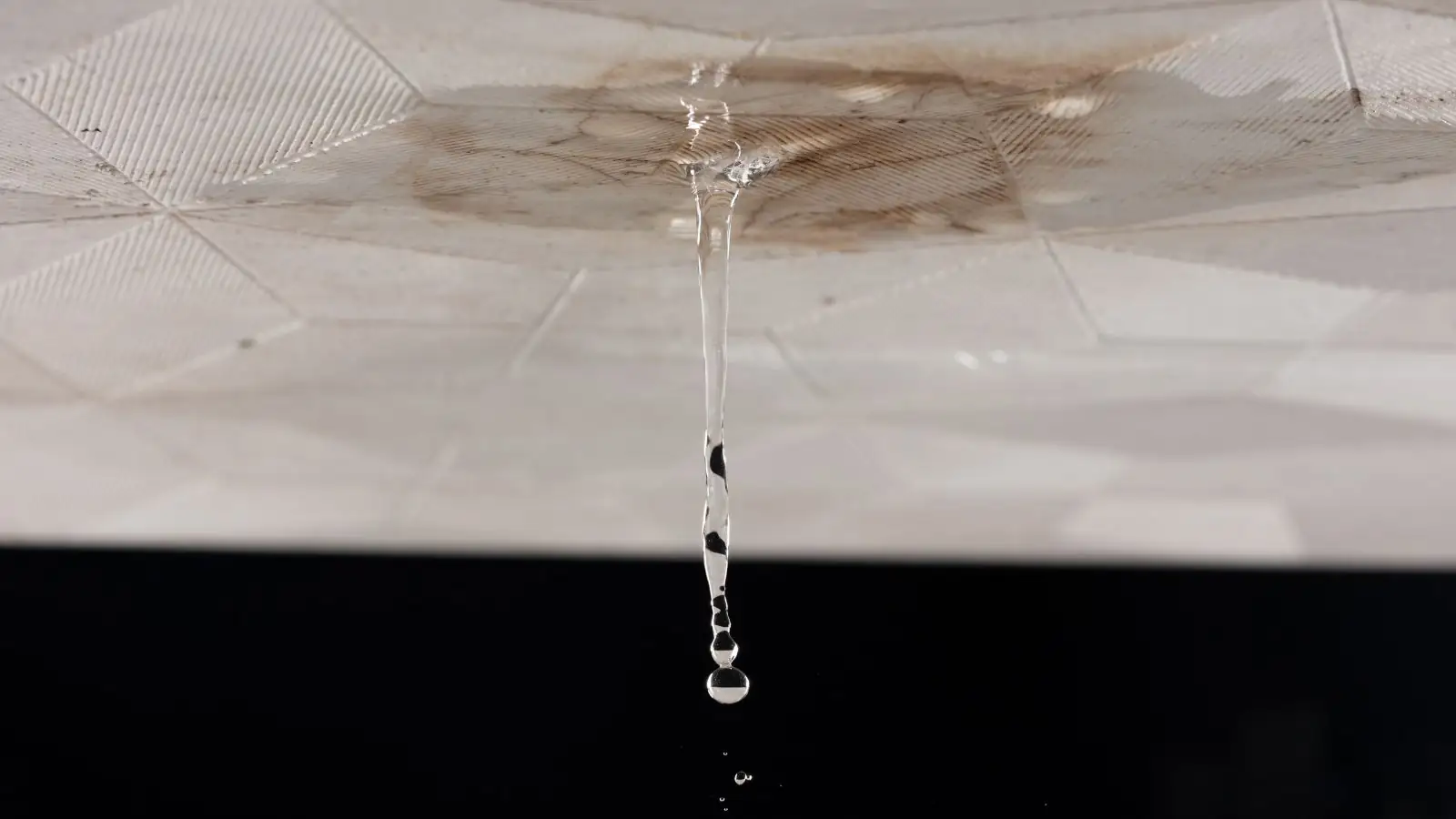
Roof leak water damage is what rain does after it gets past shingles, tile, flashing or a vent boot and into the house. It soaks attic insulation, runs along rafters and shows up as a stain or drip in a room below.
If rain is coming in now, call our 24/7 dispatch line. We dry and clean the inside of the house. Stopping the water at the roof, with a tarp or a repair, belongs to a roofer.
How rain gets past the roof
Water rarely comes through the middle of an intact roof surface. It finds the weak points: flashing around a chimney or skylight, a cracked vent boot, lifted shingles, a clogged valley or a gutter that backs water under the edge.
Rain here arrives in a short season. San Diego's Lindbergh Field gauge, in the National Weather Service climate table, shows about 85 percent of the year's rain falling from November through March. An old weak spot often shows itself in the first heavy storm of that season.
The leak is rarely where the stain is. Water runs along the roof deck or down a rafter before it drops, so a brown spot in one bedroom can trace back to flashing several feet away.
Stain spreading on the ceiling while it is still raining? Call dispatch, describe what you see, and we will say what to do before a crew arrives.
☎ (760) 769-1159What you see and what it means
| What you see | What it usually means |
|---|---|
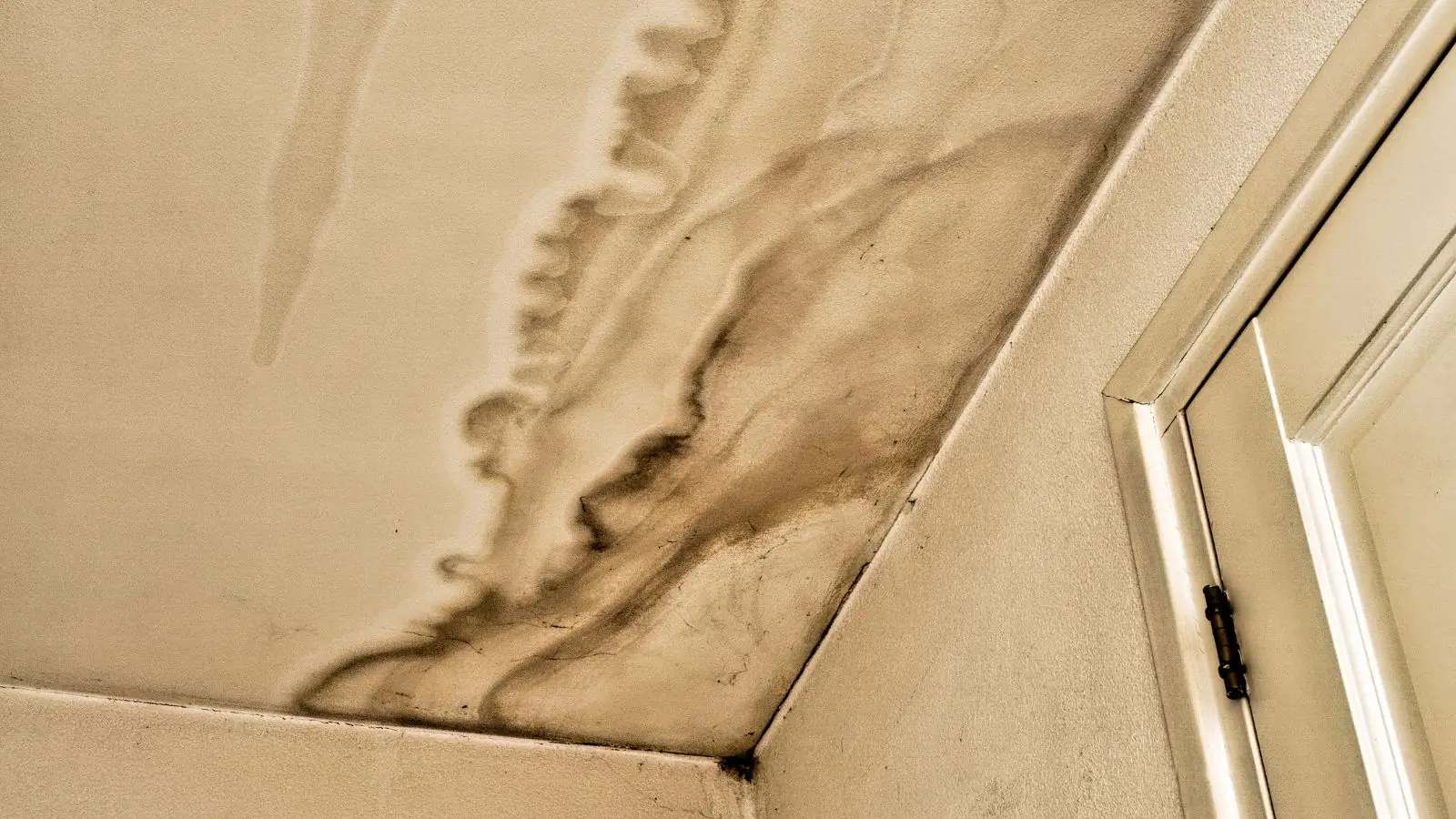
| Tan or brown ring on a ceiling | Water has soaked the board from above. Rings that grow after each rain suggest an active opening. |
| Bubbling or peeling paint | Moisture is pushing out through the finish. The board behind it is probably wet. |
| Sag or bulge in the ceiling | Water is pooled on the back of the drywall. This is a safety problem, see the steps below. |
A stain that stays the same size after several dry days is often an old leak. A stain that darkens or spreads after rain is still taking water, and the cavity above it is likely wet.
Where to look when the ceiling is stained
If you can reach the attic safely from inside the house, look there instead of on the roof. Use a flashlight and step only on framing or a board laid across it, never on bare insulation or drywall. Look for daylight at penetrations, wet or flattened insulation, dark streaks on the roof deck and drips running down nails.
Photograph what you find, wide and close up, before anything is touched. Those photos help your roofer find the opening and give your insurer a record of the loss.
First-hour safety steps
Before you call us
If water is dripping from a light fixture, a ceiling fan, a smoke detector or near an outlet, leave that room alone. Turn power off at the panel only if the panel is dry and you can reach it without standing in water. If you smell gas, see sparks or the panel itself is wet, get out and call the utility or 911 before you call us.
Stay out from under a ceiling that is bowed or bulging. It can drop its water and its weight at once.
- Move people, pets and furniture away from the wet ceiling and set containers under drips.
- If a ceiling is bowed, do not poke it. Call us and describe it so we can plan a controlled release.
- Photograph the stain, the attic and any damaged belongings.
- Call a roofer to cover the opening. A temporary cover on the roof is their work, not ours.
What we dry, remove and clean
Our work starts below the roof line. We find how far the water traveled, take the wet material that cannot dry, and dry what can stay. We follow the drying practices in ANSI/IICRC S500, the published standard for water damage restoration, and leave a record your insurer and contractor can use.
- Moisture mappingA moisture meter and a thermal imaging camera show wet insulation, ceiling board, wall cavities and framing, including areas that look dry on the surface.
- Remove wet insulationSoaked insulation holds water against the board and the framing for a long time. It comes out and is bagged, usually before anything is cut from the ceiling.
- Cut out ruined ceiling boardSagging, stained through or crumbling drywall is removed a little past the wet edge, back to dry material.
- Dry the cavitiesAir movers push dry air through the opened space, and a dehumidifier pulls the moisture out of the air. Readings repeat until the framing is dry.
- Clean and documentSurfaces are cleaned, and we write down readings, removed material and photos so the loss is on paper.
Once the structure is dry, the rebuild is a separate stage. Our water damage repair page explains new insulation, board, texture and paint. If a lot of wet material has to dry in place, structural drying explains how that works.
What changes the cost of a roof leak job
We do not quote a number without seeing the damage. These are the factors that move it.
- Affected area. One stained corner and a whole room of ceiling are different jobs.
- Drying days and equipment. More wet cavities mean more air movers and dehumidifiers for longer.
- Rebuild scope. Patch and paint is small. New insulation, board and finishes across several rooms is larger.
Roofers, contractors and a license check
A roofer is a licensed contractor. The Contractors State License Board says a license is required for projects of $500 or more in labor and material, and it caps a down payment at 10 percent or $1,000, whichever is less. Check any roofer at cslb.ca.gov or 800-321-CSLB (2752) and confirm the license covers roofing. After heavy rain a temporary cover can take a few days, so call us if yours is delayed.
We take calls from Encinitas and the surrounding area, including Carlsbad and Solana Beach.
Roof leaks, storms and your policy
Insurers usually separate sudden and accidental damage from gradual damage. Rain that came through a storm-damaged roof can be treated differently from a leak that built up over months from a worn roof, and the California Department of Insurance notes that policies typically exclude flood, mudslide and debris flow. Check your policy and ask your insurer how your loss is classified.
If the loss followed a major winter storm, see our storm water damage page, which covers storm losses and what is different about them. Keep photos, receipts and the roofer's written findings together.
Mistakes to avoid after a roof leak
- Climbing onto a wet roof or ladder to look for the hole.
- Leaving wet insulation in place because the room looks fine.
- Poking a bowed ceiling from below without a plan.
- Hiring a roofer without checking the license first.
Prevention is mostly attention. After each major storm, look at your ceilings, and once a year have a roofer check flashing and vent boots before November.
Frequently Asked Questions
Yes. Our dispatch line is open 24/7, and same-day response is offered when available. We do not promise an arrival time, but we can tell you what to do on the call.
No. Covering the opening and repairing the roof is a roofer's work. We dry and clean the interior, remove wet insulation and ceiling board, and document the damage.
Only if you can reach it safely and the attic is not dark with mold or near wiring that is wet. Soaked insulation is heavy and the ceiling board below it can fail, so it is usually better to let us handle it.
It depends on how many cavities are wet and how much material has to come out. Moisture readings decide when drying is done, not the calendar.
That depends on your policy and on whether the damage was sudden or gradual. Check your policy and ask your insurer, and keep photos and receipts.